Dramatic Classic Wardrobe Guide: What to Wear
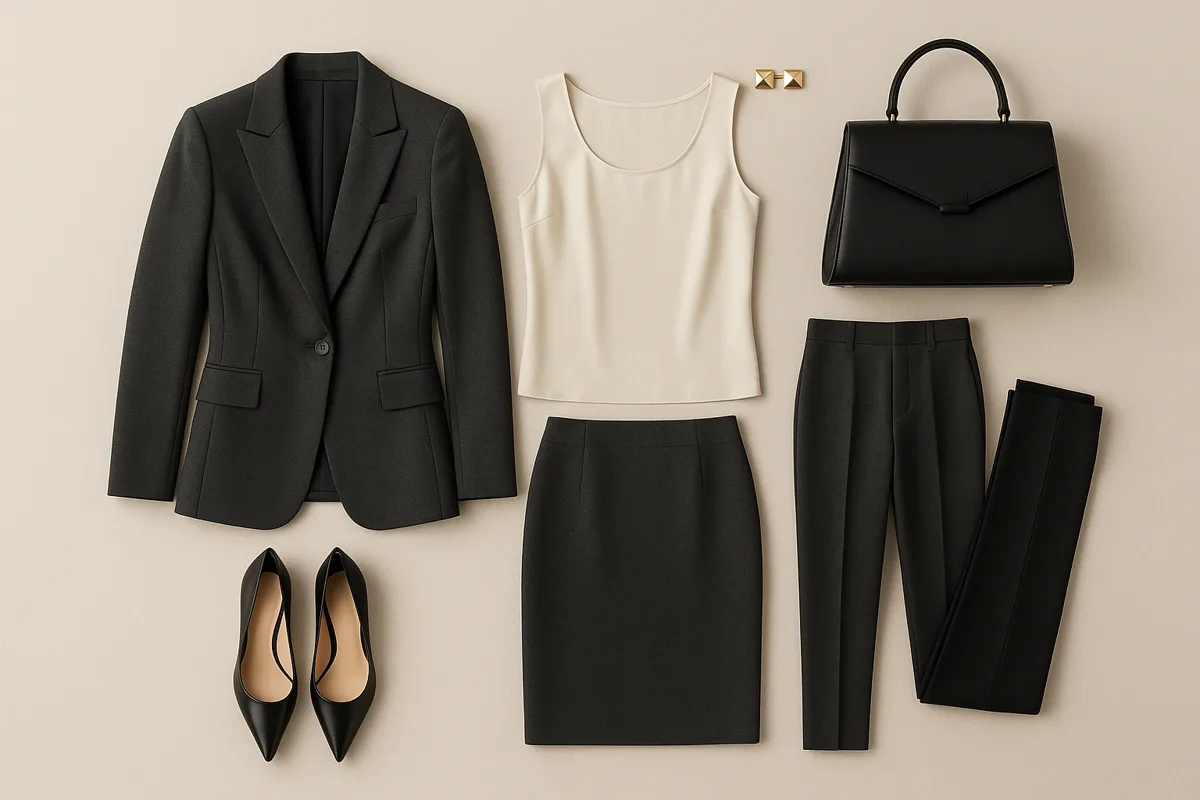
Classic family · Wardrobe
Your wardrobe runs on the same Classic foundation as the rest of the family, with one difference: everything gets a slightly sharper edge — tailored rather than soft, crisp rather than flowing.
Silhouette & line
Your strongest shape is a triangle — widest at the shoulder, narrowing cleanly down to the hem — built from trim, taut lines with crisp edges rather than anything loose or rounded. Vertical and diagonal lines do the most for you, and where you do add drape, keep it elongated and controlled rather than soft and gathering.
- Triangular shapes, widest at the shoulder, narrowing to the hem.
- Clean, sleek, straight lines with a strong vertical or diagonal pull.
- A defined shoulder line with crisp edges; elongated, controlled draping.
- Ornate, intricate, or delicate shapes; irregular shapes.
- Unconstructed or extremely boxy shapes.
- Plain symmetrical lines with no sharp edge or elongation to them.
Fabrics
High-quality, moderate-weight cloth is your base — matte finishes most of the time, though a shiny silk is fair game, and full-on lamé or metallic is right once evening rolls around. Raw silk, crisp linen, moderate-pile knits, and pliable wovens like gabardine or cashmere all hold a tailored line well.
- Matte, moderate-weight fabrics for most of what you wear.
- Raw silk, crisp linen, gabardine, cashmere, and other pliable knits and wovens.
- Shiny silks by day, lamé or metallic for evening.
- Lightweight fabrics that cling or run ultrasheer.
- Heavyweight fabrics that are stiff or bulky.
- Rough, thick textures.
Details
Trim should look crisp and deliberately geometric — this is one place a genuinely sharp edge is expected. Sharp or sculpted shoulder pads belong in nearly everything, paired with cleanly tailored necklines: notched collars, a crisp Mandarin, a jabot or ascot, a slashed neckline, a geometric V, an asymmetric angle, or a narrow cowl. Crisp pleats, sharp cuffs, notched lapels, double-breasted closures, and clean piping all read as you. A belt can define the waist with a geometric buckle, or the waist can drop away into a narrow, unbroken line.
- Sharp or sculpted shoulder pads in nearly every piece.
- Cleanly tailored, geometric necklines: notched collars, Mandarins, slashed necklines, geometric Vs.
- Crisp pleats, sharp cuffs, peaked or notched lapels, double-breasted closures.
- Ornate, intricate, or fussy detail; frills.
- Animated, “perky” detail.
- Plain, symmetrical detail with no sharp edge; wide, unconstructed, or bulky detail.
Jackets & tops
The jacket is your wardrobe’s anchor piece, from office to evening — crisp and tailored, with sharp shoulders and a line that elongates rather than cuts you off. A less-structured version works too, as long as it stays narrow and falls below the hip. The shortest you can go is the top of the hipbone, and only if it’s sleek and streamlined. Double-breasted closures are a strong move. Blouses stay elegant and crisply tailored; sweaters do best lightweight — silky, skinny-ribbed, or a long cardigan with a shoulder pad to keep the line sharp.
- Crisp, tailored jackets with sharp shoulders and an elongated line.
- Double-breasted styles; sleek, streamlined cropped jackets at the top of the hipbone.
- Elegant tailored blouses; lightweight, silky, or skinny-ribbed sweaters.
- Flouncy, nipped, gathered, or heavily trimmed jackets; peplums.
- Wide, boxy jackets, or ultracropped styles like boleros and waistcoats.
- Fluffy, ornately trimmed, thick, or shapeless sweaters; frilly or flouncy blouses.
Skirts & pants
Skirts stay straight and narrow, with a few crisp gathers stitched down at the waist for the hip rather than left loose. A small slit is a strong detail, and touches like pocket flaps or contrasting stitching suit you. Hemlines run from an inch below the knee to the top of the calf — the longer length wants a slit. Pants stay simple and tailored, with man-tailored pleats and a clean, elegant line.
- Straight, narrow skirts with crisp gathers stitched down at the waist.
- Small slits and tailored detail like pocket flaps or contrasting stitching.
- Simple, tailored pants with man-tailored pleats.
- Full, flouncy skirts, or A-line shapes; fussy detail like draping, shirring, or gathers.
- Wide, unconstructed skirts.
- Fussy or ornate, tapered, pegged, wide, or baggy pants.
Dresses
A dress should read as tailored, sleek, and narrow, with sharp shoulders and crisp detail throughout. Coatdresses, chemises, and slinky sheaths all suit you well. Define the waist with a wide, geometric belt, or drop it away entirely for a narrow, unbroken line.
- Tailored, sleek, narrow dresses with sharp shoulders.
- Coatdresses, chemises, and slinky sheaths.
- A wide, geometric belt, or a dropped, waistless line.
- Flouncy dresses with ornate or intricate trim.
- Fussy detail — shirring, gathers, silk flowers, bows, ribbons.
- Wide, unconstructed dress shapes.
Color & prints
Start every outfit from a deep shade or a neutral — that’s the foundation your line is built to show off, not a placeholder while you wait for a “real” color. Once that base is set, look for a second color to play against it: a trim in two contrasting shades has real punch, and it lands best when that accent color turns up again somewhere else in the outfit rather than sitting in one spot only. Keep the overall intensity blended so nothing interrupts the vertical pull of the line. Pastel isn’t off-limits either — the condition is the cloth, not the calendar: one genuinely special fabric, worn head-to-toe, never mixed into a darker outfit. Prints follow the same logic in a bigger key: geometric, a touch oversized, high in contrast — stripes, zigzags, slashes, sleek asymmetric patterns.
- A deep or neutral shade as the outfit’s foundation.
- Two-tone trim contrast, with the accent color resurfacing more than once.
- Bold geometric prints in high contrast — stripes, zigzags, slashes, asymmetrics.
- Busy multicolor combinations, or a scattered mix-and-match approach.
- A flat, all-neutral outfit that never lands an accent.
- Soft, flowery, ornate, or “cute” animated prints; small, tidy symmetrical prints.
Accessories & jewelry
Everything here should look clean, elegant, and crisply tailored, with a hint of angle. Shoes lean toward angular Italian-style pumps, tailored flats, sleek sling-backs, or a two-toned spectator style. Bags stay crisply tailored — envelopes, clutches, box shapes, or a structured briefcase with a frame. Belts go moderate to wide with a large geometric buckle. Jewelry should read sleek and slightly chunky, with sharp-edged shapes — earrings that sit on the ear or sweep upward rather than dangle. One strong, elegant piece says more on you than several smaller ones.
- Angular Italian-style pumps, tailored flats, sleek sling-backs, two-toned spectator shoes.
- Crisply tailored envelopes, clutches, and structured briefcases; wide belts with geometric buckles.
- Sleek, slightly chunky jewelry with geometric, sharp edges; one strong piece rather than several.
- Overly delicate or strappy shoes; plain, simple symmetrical pumps; heavy chunky styles.
- Small, rounded bags with delicate straps or ornate trim; waist-cinching or overly delicate belts.
- Overly ornate, intricate, or antique jewelry; heavy ethnic pieces; small symmetrical pieces.
Evening
Evening keeps the same symmetrical shape and clean geometric detail as daytime, with shoulder emphasis and angular necklines carrying the look, finished in smooth or beaded fabric with understated trim. A slinky sheath, a tailored gown or dinner suit, a long gown with sharp shoulders, or evening pants with a tailored jacket all read as strong choices.
- Slinky or jacketed sheaths; long gowns with sharp shoulder emphasis.
- Tailored gowns and tailored dinner suits.
- Evening pants paired with a tailored jacket.
Want the full picture? Take the quiz to confirm your type, or head back to the Dramatic Classic hub.
Unofficial guide inspired by the Image Identity system in David Kibbe’s Metamorphosis (1987). Body types describe line, not worth — every type is the goal, not a consolation prize.