Dramatic Classic Hair & Color Guide
Classic family · Hair & Color
Your cut
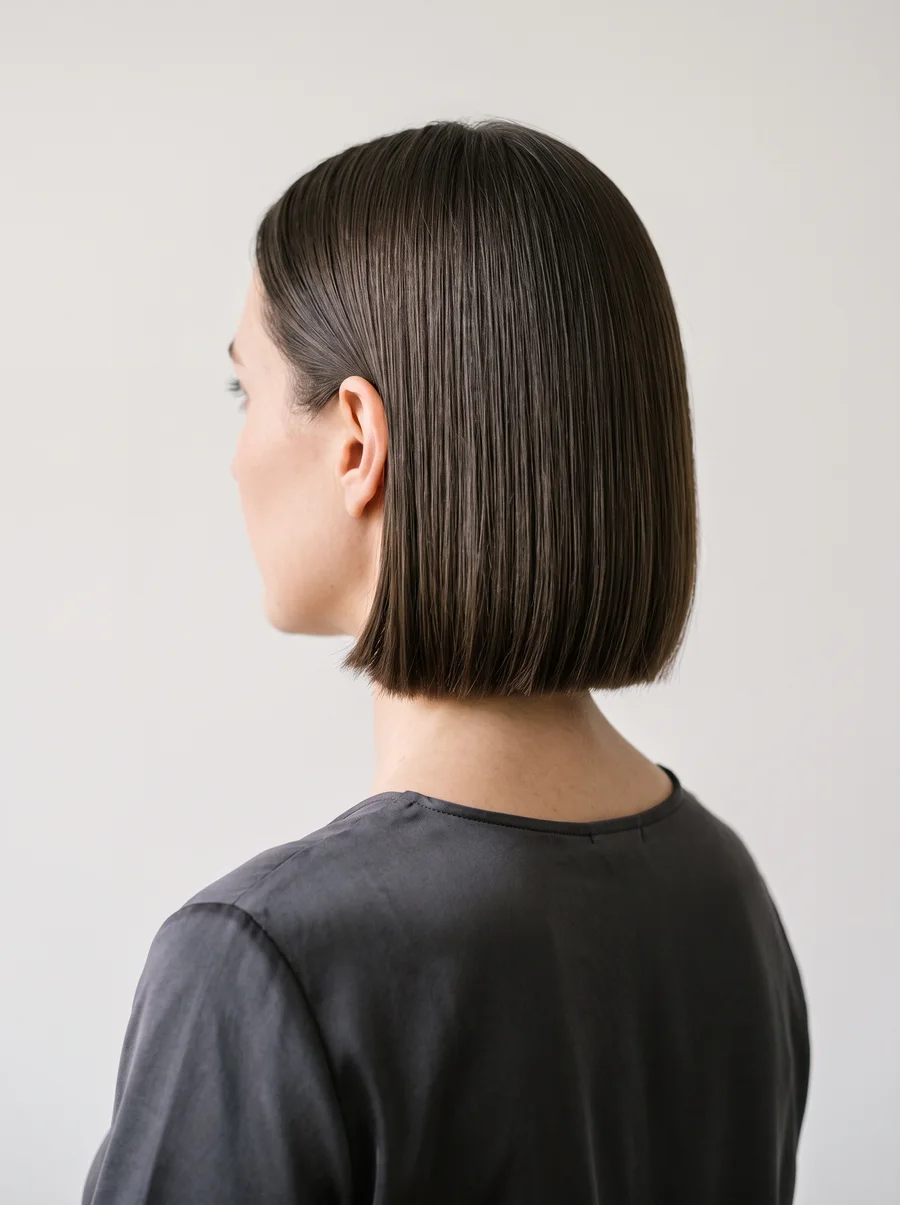
Sculpted and sleek is the goal, with a shape that carries a bit of geometry and angle rather than falling soft. Blunt cuts work best as a base, with some layering added depending on how your texture behaves. Moderate to short length suits you well; if your hair runs very fine or thin, going shorter and sleeker tends to look more finished than trying to grow it long. Longer hair can still work, but it usually needs some back-teasing or setting to hold a genuinely sculpted shape rather than hanging flat. A swept or dipped asymmetric detail is an especially strong move for this line.
If you have natural wave or curl, a set helps mold it into something with real shape — a marcelled, sculpted effect rather than loose waves left to fall on their own. The through-line, whatever your texture, is that the cut should look like it was designed with intention, not simply grown out.
- Ornate or lavish hair; wild, “fantasy” styles.
- Cropped, boyish hair, or overly layered styles.
- Wash-and-wear styles left with no shape at all; symmetrical styles with no angle to them.
Your haircolor
Rich and natural-looking is the aim, staying close to your original shade rather than straying far from it. If you want a real change, go slightly darker or brighter — never lighter, which tends to wash out the impact this line depends on. Subtle lowlights are your best highlighting option; a dramatic front streak can also work, especially paired with an asymmetric, geometric dip in the cut. Match your options to your skin’s undertone and your natural contrast — how far your hair color sits from your skin tone.
| Warm skin (golden) | Cool skin (blue) | |
|---|---|---|
| High-Contrast | Deep Chestnut Brown; Mahogany or Deep Auburn; Warm White; cover gray completely | Black (only if your skin tone is olive); Dark Ash Brown, no highlights; Silver or White; cover gray unless dramatically streaked or totally gray |
| Low-Contrast | Light Golden Brown; Light Auburn to Copper; Deep Honey Blond; Bright Golden Blond; Warm White; cover gray unless totally gray | Medium to Soft Ash Brown; any shade of Ash Blond; bold streaks of Light Ash Blond; soft snowy White; cover gray unless totally gray |
An overall color process gives you the rich, saturated base this line needs to hold its impact. If you’re covering gray, never go lighter than your original color — a lighter shade reads as softened and muted rather than gentle, and tends to look more tired than the richer shade it replaced.
- Any process aimed at “softening” your natural haircolor.
- Unnatural colors, or overlightening — richness and intensity are the point, with only the subtlest artificial enhancement.
Your palette
Clothing color works on the same principle as your hair: nothing about it should read as toned-down. Ground the outfit in a dark or neutral shade first, then build outward — that base is what lets a bolder color show up and register as sharp rather than loud. Trim is where the payoff shows: set two colors against each other, and let the accent make a second or third appearance elsewhere in the look instead of stopping at one cuff or collar. Pastel has a place too, just not in small doses — it earns its spot only as a single beautiful fabric worn top to bottom.
- A dark or neutral shade grounding the outfit before anything bolder joins it.
- Two colors set against each other in the trim, with the accent reappearing more than once.
- Pastel worn top-to-bottom in one special fabric, not mixed into darker pieces.
- A scattershot mix of colors with no clear lead.
- An outfit so neutral it never commits to an accent.
Want the full picture? Take the quiz to confirm your type, or head back to the Dramatic Classic hub.
Unofficial guide inspired by the Image Identity system in David Kibbe’s Metamorphosis (1987). Body types describe line, not worth — every type is the goal, not a consolation prize.