What Dramatic Classics Should Never Wear (and What to Wear Instead)
Classic family · What to avoid
Dramatic Classic is a Classic line with a slight Dramatic undercurrent added in — never swapped in. That means the avoids below break in two directions: anything too soft and fussy erases the edge that makes you a Dramatic Classic rather than a Classic, while anything too plain and unshaped erases the tailoring that keeps the whole look elegant instead of severe.
Ornate, fussy, or overly decorated
Delicate, intricate, or heavily trimmed detail competes with the crisp geometry that’s your real strength — it reads as fussy rather than polished on this line.
- Ornate, intricate, or delicate shapes and detail; frills and animated “perky” trim.
- Flouncy, nipped, or heavily trimmed jackets; peplums.
- Fussy dress and blouse detail — shirring, gathers, silk flowers, bows, ribbons.
- Overly ornate, antique, or heavy ethnic jewelry; overly ornate belts, hats, or bags.
- Flowery, soft, ornate, or “cute” animated prints.
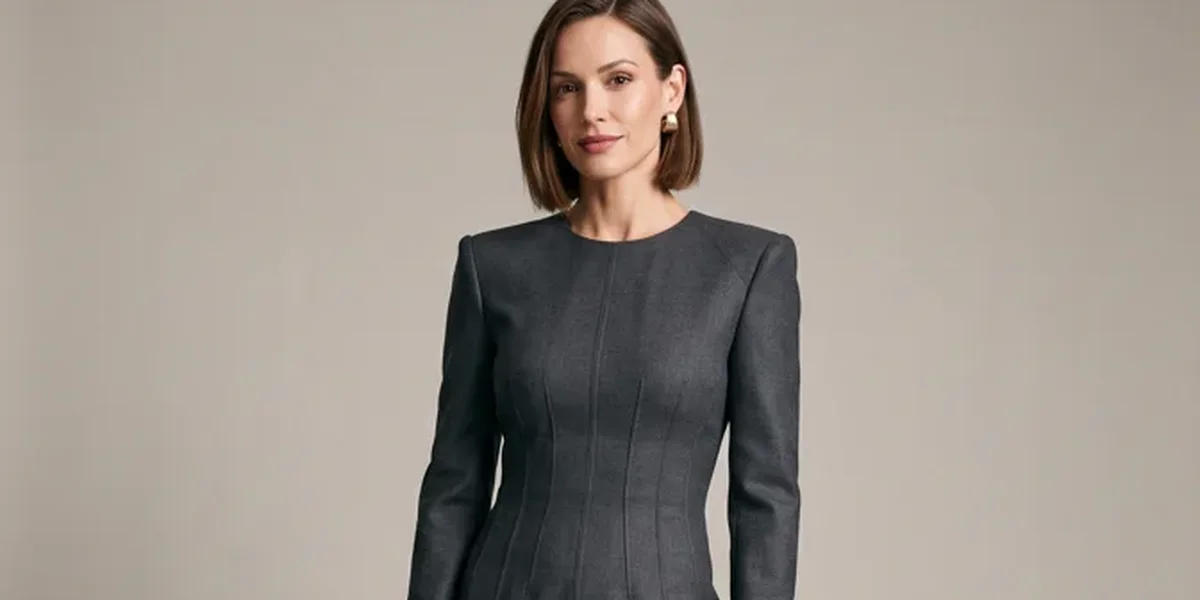
- Crisp, geometric shapes and sharp, sculpted shoulder pads.
- Tailored jackets, blouses, and dresses with sharp shoulders and crisp detail.
- Sleek, slightly chunky jewelry with geometric, sharp edges; crisply tailored hats and bags.
- Bold, geometric, slightly oversized prints — stripes, zigzags, sleek asymmetrics.
Loose, unconstructed, or shapeless
A shape with no structure has nowhere to hang on this frame but flat — it swallows the shoulder line and elongation your triangle silhouette depends on.
- Unconstructed, extremely boxy, or wide silhouettes and detail.
- Wide, boxy jackets; ultracropped styles like boleros and waistcoats.
- Wide, unconstructed skirts, A-lines, or baggy, unconstructed pants.
- Thick, rough, bulky, or shapeless sweaters; cropped sweaters and vests.
- Wide, unconstructed dresses; unconstructed or floppy hats.
- Triangular shapes, widest at the shoulder, narrowing to the hem.
- Tailored jackets with an elongated line; straight, narrow skirts and pants.
- Lightweight, silky, or skinny-ribbed sweaters.
- Tailored, narrow dresses; crisply tailored hats.
Plain and symmetrical, without an edge
Balanced but flat shapes — nothing wrong with them on their own — just miss the sharp or sculpted edge that separates this line from a plain Classic look.
- Simple symmetrical shapes and lines with no sharp edge or elongation.
- Plain pumps or simple symmetrical shoes; plain symmetrical bags with a frame and handle.
- Small symmetrical prints; small symmetrical jewelry; symmetrical crew-neck sweaters.
- Symmetrical hairstyles with no angle to them.
- Triangular, sharp-edged shapes throughout.
- Angular Italian-style pumps or two-toned spectator shoes; crisply tailored envelope or box bags.
- Bold geometric prints; sleek, geometric, sharp-edged jewelry.
- Sculpted, angular hair with an asymmetric sweep or dip.
Clingy, sheer, or overly heavy fabric
Fabric that clings, floats without body, or turns stiff and bulky works against the crisp, tailored surface this line is built to show off.
- Lightweight fabrics that cling or run ultrasheer.
- Heavyweight fabrics that turn stiff or bulky; rough, thick textures.
- Tapered or pegged pants; opaque or lacy hosiery.
- Matte, moderate-weight fabrics: raw silk, crisp linen, gabardine, cashmere.
- Straight, man-tailored pants.
- Sheer, silky hosiery blended with hemline and shoe.
Scattered color and no bold accent
Both directions break your vertical line the same way — too many competing colors, or a look so neutral it never lands an accent at all.
- Multicolor splashes or mix-and-match combinations.
- An all-neutral or all-monochromatic outfit with no bold accent anywhere.
- Irregular prints that scatter rather than repeat.
- Build the outfit from a dark or neutral base first.
- Set two colors against each other in the trim, and let the accent show up again elsewhere — sleeve, shoe, belt.
- Save pastel for one special fabric worn head-to-toe, not scattered across separate pieces.
Softened, wild, or bare
The last group covers a different kind of mistake — going too far toward soft, wild, or empty, which undercuts the composed charisma this line runs on just as much as too much fuss would.
- Ornate or lavish hair; wild, “fantasy” styles; wash-and-wear styles left with no shape.
- Haircolor processes aimed at “softening” your natural color, or unnatural colors and overlightening.
- A pastel or all-neutral face with no smoky depth; watercolor-soft edges or pale lips; heavy glitz.
- A bare “no makeup” look; minimal or “no jewelry” looks; waist-cinching belts.
- Sculpted, geometric hair with an asymmetric sweep or dip.
- Rich, natural-looking haircolor built from an overall process and subtle lowlights.
- A smoky, sculpted face with deep, moderately dark color at eyes, cheek, and lip.
- One strong, elegant jewelry piece; a wide belt with a geometric buckle.
Want the full picture? Take the quiz to confirm your type, or head back to the Dramatic Classic hub.
Unofficial guide inspired by the Image Identity system in David Kibbe’s Metamorphosis (1987). Body types describe line, not worth — every type is the goal, not a consolation prize.