Theatrical Romantic Wardrobe Guide: What to Wear
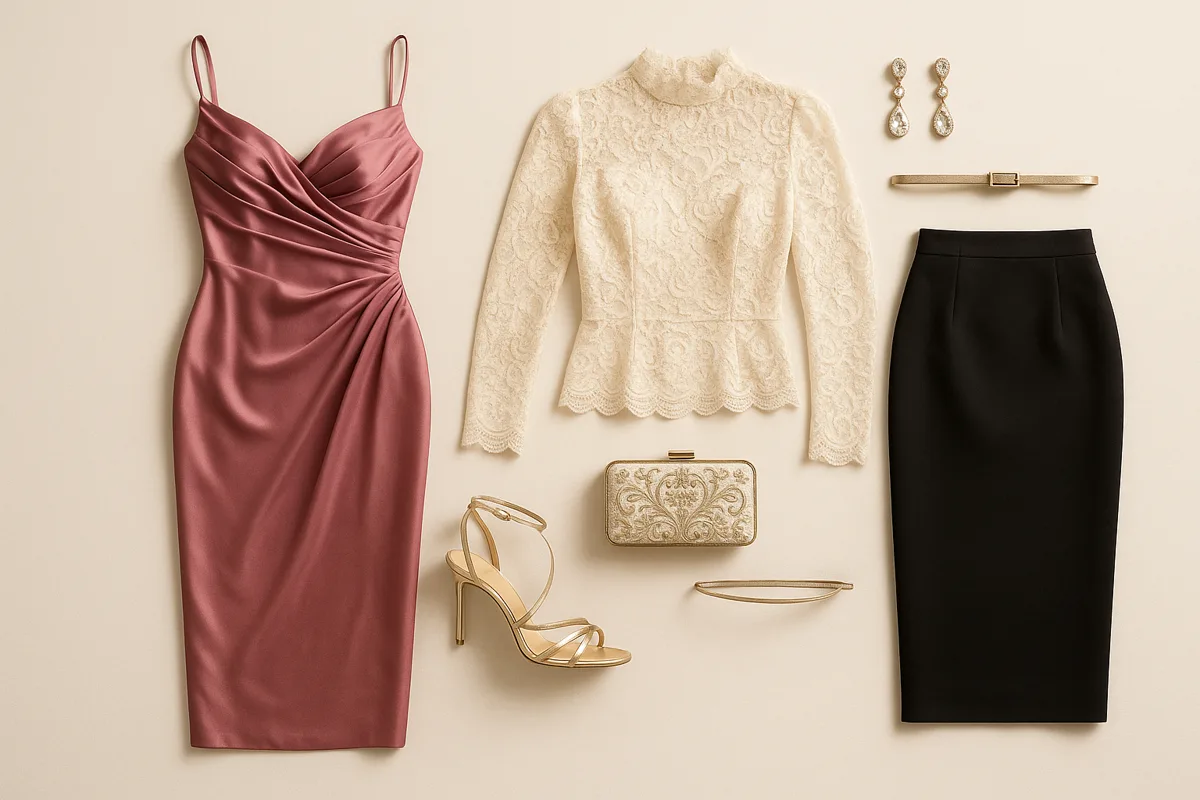
Theatrical Romantic family · Wardrobe
Every piece you wear should showcase the curvy hourglass figure underneath while giving that faint sharper edge somewhere to live — in a shoulder, a trim detail, a crisply defined waist. The wardrobe here is soft and fluid like a Romantic’s, but with a touch more structure and polish threaded through it.
Silhouette & line
Your line is soft, curved, and hourglass, always emphasizing the waist and showcasing your figure — but with shoulders that take a crisp pad and hems, wrists, and knees that taper rather than billow. Slightly oversized shapes can work in your favor, since the waist definition underneath keeps everything from reading shapeless.
- Soft, hourglass lines with a sharply defined waist.
- Crisply padded shoulders paired with soft draping elsewhere.
- Tapering at the wrist, hemline, and knee.
- Severe or straight-lined silhouettes; tailored shapes.
- Oversized or unconstructed silhouettes with no waist definition.
- Wide, horizontal lines, or long verticals that hide the waist.
Fabrics
Lightweight and drapable is the baseline — silks, jersey, challis, crepe, and handkerchief linen all move the way your figure wants to move. Soft plush-pile textures like suede, velvet, and shantung add richness, sheer and shiny fabrics bring shimmer, and fluffy knits — angora, bouclé — are especially effective on you.
- Lightweight, drapable fabrics: silk, jersey, challis, crepe, handkerchief linen.
- Soft plush-pile textures: suede, velvet, shantung.
- Sheer and shiny fabrics, and fluffy knits like angora and bouclé.
- Stiff or heavyweight fabrics.
- Rough textures.
- Dull-finished fabrics with no shine.
Details
Detail should be intricate, ornate, delicate, and genuinely lavish — an abundance of trim helps frame your face rather than distracting from it. Bows, sheer lace, jabots, soft ruffles, and sparkly appliqué all belong. Shoulders take a curved pad with tucks or gathers; sleeves taper at the wrist with delicate, ornate buttons or trim. The waistline gets emphasized everywhere — gathers, shirring, draping — since it’s the one line you never want to lose.
- Intricate, ornate, lavish trim — bows, sheer lace, jabots, ruffles, sparkly appliqué.
- Padded, curved shoulders with tucks or gathers.
- Constant waist emphasis via gathers, shirring, or draping.
- Plain or minimal detail; sharp or severe trim.
- Extremely oversized or bulky detail; symmetrical or subdued trim.
- Crisp, “perky” detail.
Jackets & tops
Jackets do best short and nipped at the waist, with a flouncy peplum flaring out or hanging in back. Lapels can go ornate — scalloped edges, braiding, bejeweled trim — or take a slightly pointed, peaked, or shawl shape, with trim always leaning ornate rather than plain. Blouses stay soft, silky, and draped with lavish trim and an ornate neckline, cut short and fitted at the waist and wrists; sweaters follow the same logic in a plush, fluffy knit with soft necklines and lavish pattern.
- Short jackets nipped at the waist, with flouncy peplums.
- Ornate lapels — scalloped, braided, bejeweled — or shawl lapels.
- Soft, silky, draped blouses and plush sweaters, fitted at the waist and wrists.
- Severely tailored jackets; unconstructed, boxy jackets; traditional blazers.
- Long jackets that hide the waist.
- Stiffly tailored blouses; heavy bulky knits, skinny ribbed knits, or plain cardigans and shetlands.
Skirts & pants
Skirts should be soft and shapely — a tulip shape, gathered at the waist and narrowing at the hem, worn short (no longer than just below the knee), or a softer, uneven-hemmed skirt that flows longer, to at least mid-calf. Draping, shirring, gathers, and bias cuts all read as intricate rather than fussy; trumpets, sarongs, and circle skirts all work. Pants should be just as soft and draped, gathered or shirred at the waist, narrow or tapered at the ankle, and cut short enough to end at the ankle.
- Tulip-shaped skirts gathered at the waist, short or with an uneven flowing hem.
- Draping, shirring, gathers, bias cuts, trumpets, sarongs, and circle skirts.
- Soft, draped pants gathered at the waist, tapered at the ankle, cut short.
- Severe or straight skirts; traditional tailored styles like A-lines or pencil skirts.
- Wide, shapeless skirt styles; sharp pleats.
- Straight, tailored pants with sharp pleats, cuffs, or pockets; baggy unconstructed pants.
Dresses
A dress should be feminine and shapely, with defined shoulders, waist emphasis, and intricate detail — shirring, gathers, sparkle, appliqué — carrying the design. Necklines drape softly, wrists taper, and the hemline tapers if short or flares if long. Lightweight fabric with sheen or plushness, in a luscious color, finishes the look.
- Feminine, shapely dresses with defined shoulders and clear waist emphasis.
- Intricate detail — shirring, gathers, sparkle, appliqué — with soft draped necklines.
- Lightweight, sheeny or plush fabric in a luscious color.
- Sharply tailored styles.
- Long, “no waist” dresses; symmetrical or subdued styles.
- Unconstructed dress styles.
Color & prints
Color here should read like it was mixed on purpose — a rich blend of pastel and vivid, always anchored by one truly saturated note so the whole outfit never goes sleepy. Contrast is welcome as long as it feels curated rather than clashing; think of it as drama with a light touch. Pale shades read best next to soft, light-toned accessories, while deeper colors want a jolt of brightness worked in, or belong to evening altogether, where a glossy or plush fabric — charmeuse, satin, lace, velvet — lets the darkness read as glamour rather than gloom. Prints want scale first: go moderate to large, never small or contained. From there, let the pattern feel painterly rather than plotted — a soft abstract wash of color and curling floral motifs, rendered loosely rather than crisply, with edges that blur and drift instead of stopping sharply.
- A rich, deliberate color mix with one bold, saturated note always present.
- Pale shades paired with light accessories; deep shades lifted with a bright jolt, or saved for glossy evening fabric.
- Large-scale, painterly prints — abstract washes and curling floral motifs with blurred edges.
- Head-to-toe darks; head-to-toe neutrals.
- Monochromatic color schemes.
- Geometrics, small symmetrical prints, “perky” animated styles, stripes, and plaids.
Accessories & jewelry
Invest in quality here — every accessory should read feminine, intricate, and ornate. Shoes stay delicate and strappy, with open backs and toes. Bags should be small and rounded, with intricate trim — gathers, tucks, beads — in lightweight supple leather, fabric, or an unusual material like ostrich or suede. Belts get worn whenever possible to showcase the waist: soft, supple, moderate-to-wide, with ornate, bejeweled, or beaded buckles. Jewelry is your single most important accessory — intricate, ornate, rounded, swirling, baroque, always with some sparkle, kept delicate in workmanship even when lavish in effect.
- Delicate, strappy shoes with open backs and toes.
- Small, rounded bags with intricate trim in supple leather or unusual materials.
- Wide, ornate, bejeweled belts, and intricate, sparkly, baroque jewelry.
- Basic, angular, chunky, or plain shoes.
- Plain, boxy, or oversized tailored bags.
- Stiff belts, narrow self-belts, or slim subdued styles; geometric, sharp, chunky, or “no jewelry” looks.
Evening
Evening is where the theatrical side gets its due — fitted shapes with ornate trim, waist emphasis, and cleavage emphasis, in draped, sparkly, and plush fabrics. A form-fitting gown with cleavage emphasis, a shirred and draped cocktail dress, a fitted dinner suit with a peplum jacket and ornate trim, or a bustier dress all read as exactly right.
- Fitted gowns with cleavage and waist emphasis, in draped or sparkly fabric.
- Shirred, draped cocktail dresses, or fitted dinner suits with peplum jackets.
- Bustier dresses with ornate trim.
Want the full picture? Take the quiz to confirm your type, or head back to the Theatrical Romantic hub.
Unofficial guide inspired by the Image Identity system in David Kibbe’s Metamorphosis (1987). Body types describe line, not worth — every type is the goal, not a consolation prize.