Soft Dramatic Hair & Color Guide
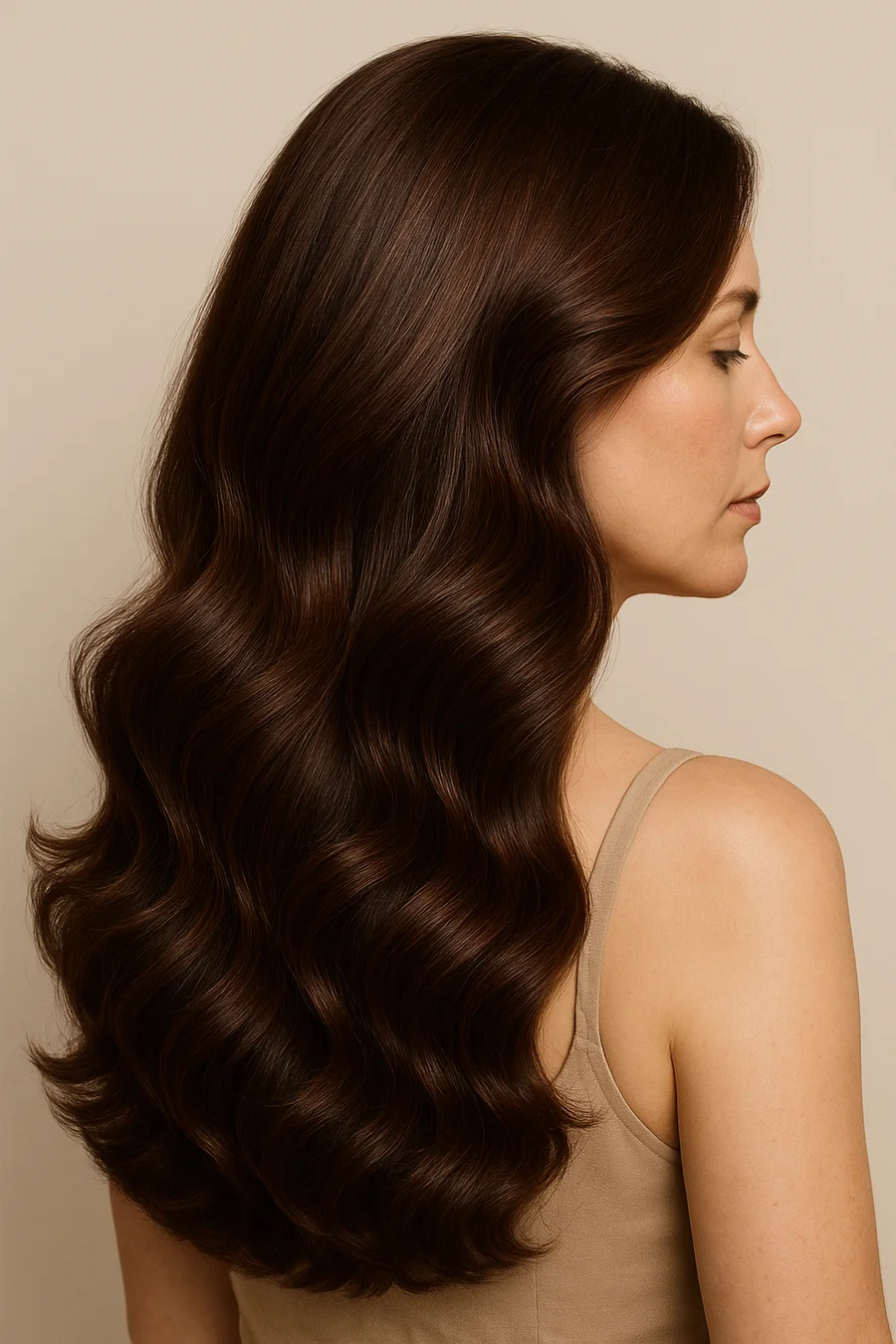
Dramatic family · Hair & Color
Your cut
Lavish and full is the goal — an elaborate coiffure or a fantasy style earns its keep on you. The best shapes are bold, geometric or asymmetric, then softened with curls, waves, or partial layering so the overall effect stays sensual rather than stiff. Teasing, setting, waving, and perms are all fair game as long as the result looks cared for rather than undone. This is the same “T” logic that runs through your wardrobe — a bold, structured shape underneath, with softness layered on top rather than replacing it, so the hair reads as done and glamorous rather than merely big.
Sophistication is the test that separates this from an overdone look: your hair should always look like it was styled on purpose, even when the shape is elaborate. A tousled wave or a soft partial curl is fine, even encouraged, but it should sit on top of real shape and volume — not stand in for it. Kibbe names this type Diva Chic for a reason, and hair is one of the fastest ways to put that idea into practice — a bold, glamorous shape announces the whole look before the rest of the outfit even arrives.
- Sharp geometric cuts or symmetrical blunt-edge styles.
- “Wash and wear” styles that look unfinished.
- Overly delicate or wispy styles.
Each of those avoids is really the same mistake in a different outfit: a cut with no softness, no volume, or no visible effort behind it undersells a face this expressive.
Your haircolor
Rich, bold, and vivid is the concept — depth is the whole game here, and pale, washed-out color drains the drama while saturated color feeds it. Artificial color is entirely fair game as long as it stays strong and dramatic: blue-black, fiery red, platinum, or a bright yellow-blond. If you highlight, make it a dramatic, sweeping streak rather than something subtle, and if you’re going gray, lean into it with bold streaks rather than blending it away quietly. Start from your skin’s undertone, warm or cool, and your natural contrast level — how much your hair color differs from your skin tone — and let the chart below point you toward a shade family from there.
| Warm skin (golden) | Cool skin (blue) | |
|---|---|---|
| High-Contrast | Deep Chestnut Brown with Red lights; Deep to Bright Auburn; Vivid Copper; Warm White; cover gray completely | Black; Dark Ash Brown (no highlights); Silver or White sprays around the face; cover gray until hair is completely gray |
| Low-Contrast | Rich Honey Blond with golden lights; Bright Red; Bright Strawberry; Bright Golden Blond; Bright Flaxen (Yellow); Warm White; cover gray completely | Medium to Soft Ash Brown with subtle Ash lights; any shade of Ash Blond, deep to pale, with subtle Ash lights; Platinum; cover gray completely unless a dramatic shade of Silver or White |
An overall color process is generally your best foundation, with very subtle highlights layered on afterward if you want to lift the color further. Graying is another place to embrace theatrical scale rather than fight it — a bold, sweeping streak of silver or white reads as an intentional design choice, where scattered gray blended away quietly just looks tired against a face built for this much richness.
- Overly muted haircolors that flatten the richness this type depends on.
- Overly lightened or pale haircolor with no rich, vibrant base underneath — platinum is the one exception, when it’s done deliberately.
- Subtle highlights or delicate lightening — go dramatic or skip it.
Your palette
Color should be bold and dramatic, never dull, built from original combinations of bright and dark. A full pastel sweep, worn head to toe, reads as elegant, and a monochromatic outfit needs a vivid accent to keep it from falling flat. Approach dressing as one polished ensemble rather than assembled separates — the same rich, intentional quality that defines your ideal haircolor should carry through to every color choice you make below it.
- Bold, original bright-and-dark color combinations.
- Head-to-toe pastel looks; monochromatic outfits lifted with a vivid accent.
- A single, polished, ensemble approach to color.
- Multicolor splashes or mix-and-match dressing.
The same richness rule extends to prints: bold, wild, ornate patterns — splashy watercolors, oversized abstract florals, animal prints, irregular shapes with soft, rounded edges — belong in your closet, while sharp geometric or small, fussy prints don’t. Cut, haircolor, and clothing color are all answering the same brief: rich, bold, and unmistakably alive, never muted down to blend in. Treat every one of those choices as a chance to turn the volume up rather than a place to play it safe.
Want the full picture? Take the quiz to confirm your type, or head back to the Soft Dramatic hub.
Unofficial guide inspired by the Image Identity system in David Kibbe’s Metamorphosis (1987). Body types describe line, not worth — every type is the goal, not a consolation prize.