Natural Wardrobe Guide: What to Wear
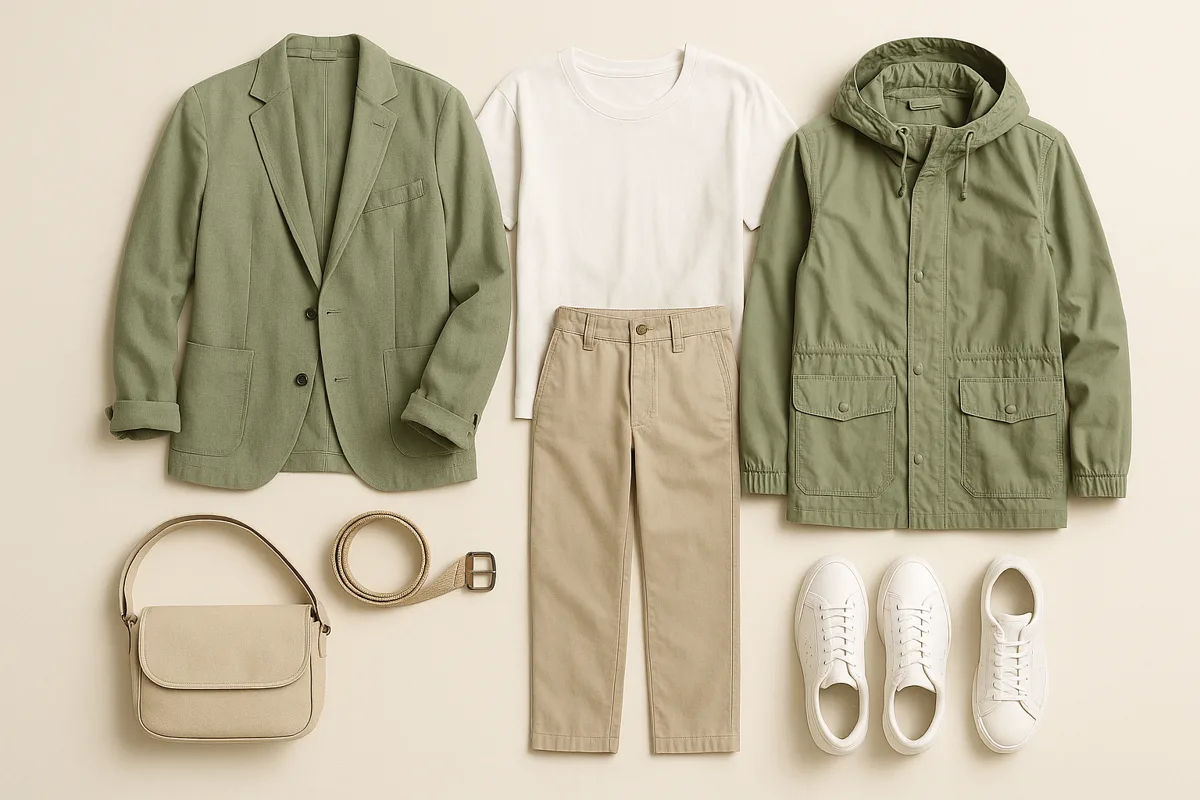
Natural family · Wardrobe
Every piece in a Natural wardrobe answers to the same brief: relaxed but never sloppy, geometric but never sharp. Think soft-edged rectangles and easy asymmetry over tight tailoring or precious detail — clothes that move the way you do.
Silhouette & line
Your outline reads relaxed and straight rather than fitted or full — softly put together, narrow enough to keep its shape, but never tight. The shapes you gravitate to are geometric with the corners knocked off: soft oblongs, rounded rectangles, the occasional irregular or asymmetric cut.
- A relaxed, straight silhouette — softly tailored or unconstructed.
- Soft-edged geometrics: rounded rectangles, soft oblongs, irregular or asymmetric cuts.
- Just enough structure to hold a line without pinning you into place.
- Sharp, severely straight-edged lines.
- Silhouettes cinched too tight, or so oversized they lose their form.
- Ornate, intricate, or swirling, flowing lines.
Fabrics
Texture is where you have the most room to play. Soft, rough, or nubby surfaces work in your favor, and a fabric that wrinkles or drapes casually is a feature, not a flaw. Knits work at almost any weight, moderate is your sweet spot, and plush velour, suede, or soft leather are as good as it gets. Keep the finish matte for daytime; save shimmer and metallics for evening.
- Soft, rough, or nubby textures; fabric that wrinkles and drapes easily.
- Knits in any weight; moderate-weight cloth as a default.
- Plush velour, suede, soft leather; lighter raw silk or linen in warm weather.
- Sheer fabric.
- Clingy fabric, outside of knits.
- Flimsy, insubstantial cloth.
Details
Keep detail minimal and let the cut do the work. Necklines stay simple and open — a soft boatneck, a clean slash, a deep V, a loose cowl, a notched collar. Shoulders take a soft pad well, with a slightly dropped line rather than a set-in one. At the waist, look for a dropped, sashed, or overbloused effect. A little rough-textured trim — embroidery, eyelet, coarse lace — is decoration enough.
- Minimal, unconstructed, or loosely tailored detail.
- Open necklines: soft boatnecks, clean slashes, deep V’s, loose cowls, notched collars.
- Soft shoulder pads, slightly dropped shoulders, dropped-waist ties or sashes.
- Extremely tailored or sharply angular detail.
- Ornate, intricate, or frilly detail.
- Closed, restrictive necklines or collars.
Jackets & tops
Jackets do best long and loose — upper-thigh or longer, cut for ease, with a soft shoulder pad and some surface texture. Patch pockets, notched or lapel-less fronts, a long cardigan shape, an open double-breasted style, or a dropped-waist blouson all work. Blouses stay simple and unconstructed. Sweaters are one of your easiest categories: thick knits, ribs, nubby weaves, cable stitch, even shaggy mohair, solid or in a wild print.
- Long, unconstructed jackets with soft shoulder pads and textured surfaces.
- Patch pockets, notched or lapel-less fronts, open double-breasted or blouson styles.
- Simple open-neck blouses; sweaters in thick, ribbed, cabled, or shaggy knits.
- Severely tailored, tightly constructed, or cropped jackets.
- Flouncy jacket shapes: peplums, nipped-in waists.
- Frilly or severely tailored blouses; overly delicate, fluffy-trimmed sweaters.
Skirts & pants
Skirts look best simple and straight, softly tailored rather than crisp — culottes and gauchos both count. Pleats, slits, low kick pleats, and button-front styles with trouser detail add just enough interest, at a length around an inch below the knee. Pants are close to foolproof: tailored, elasticized, drawstring, sweats, or jeans, cropped or long. Come evening, shiny or satiny pants, pajama styles included, are fair game.
- Simple straight or softly tailored skirts; culottes, gauchos, button-front styles.
- Pleats, slits, or kick pleats; trouser details like plackets and pockets.
- Nearly any pant style, casual to dressy; shiny or satiny for evening.
- Full, gathered, or flouncy skirts; accordion pleats.
- Severely straight or long, pencil-slim skirts.
- Draped, tapered-leg pants with a gathered waist.
Dresses
Dresses want the same relaxed, narrow shape as everything else — unconstructed, with a dropped or loose waist. A softly tailored coatdress with an open neckline, a chemise in textured raw silk or linen, or nearly any knit dress all read as effortlessly you.
- Simple, unconstructed, narrow dress shapes with a dropped or loose waist.
- Open-neck coatdresses; a textured chemise; knit dresses of nearly any kind.
- Wrap, safari, T-shirt, blouson, or two-piece styles.
- Severely tailored dresses.
- Flouncy styles.
- Extremely wide, shapeless dresses.
Color & prints
This is your one wide-open category — treat color as a place to experiment rather than a rule to follow. Vivid pairings, unexpected brights next to soft pastels, wild mixes nobody would plan on paper all suit you, and matching perfectly is optional. Neutrals need a fabric with real texture and a loud accent to keep from going flat. Prints follow the same casual, irregular energy — plaids, stripes, paisleys, animal print, loose abstract shapes — at a moderate-to-large scale with edges that blur rather than snap into place.
- Vivid, bright, pastel, or unlikely color pairings, worn without needing them to match.
- Textured neutrals lifted with one loud accent color.
- Casual, irregular prints in a moderate-to-large scale with a soft, blended edge.
- Monochromatic dressing, unless the fabric itself is richly textured.
- Small, tightly symmetrical, or watercolor prints.
- Extremely angular, ornate, or oversized prints.
Accessories & jewelry
Keep accessories minimal and geometric, soft-edged rather than fussy. Bags do best as moderate, unconstructed pouches or shoulder bags in supple leather, with a box shape for evening. Belts follow suit: simple leather with a soft buckle or a fabric sash. Hats want to be big, loose, and a little floppy, never small or severe. Jewelry can go two ways — earthy handcrafted pieces in copper, silver, amber, turquoise, or bold funky costume pieces in enamel and glass — both beat a small, delicate chain, which tends to disappear on you. Shoes stay simple and tailored: low to moderate heels, stacked heels, wedges, flats, or bare sandals for evening.
- Moderate, unconstructed bags and shoulder bags in supple leather; box shapes for evening.
- Simple geometric leather belts with texture; fabric sashes and ties.
- Big, loose, floppy hats; flesh-tone hosiery for business, bright or printed for casual.
- Chunky, soft-edged jewelry — earthy handcrafted pieces or bold funky costume designs.
- Simple tailored shoes: low to moderate heels, stacked heels, wedges, flats, bare evening sandals.
- Delicate, strappy, or heavily ornamented bags and shoes.
- Overly delicate or ornate belts; small, crisp, or severe hats.
- Dark stockings for daytime, or lacy, ornate hosiery.
- Ornate, antique, dangly, or small symmetrical jewelry.
Evening
Evening is where you’re allowed a little shine without losing the easy fit that defines you everywhere else. Keep the shape simple, the detail minimal, and the neckline or shoulder bare. Fabric can turn smooth and slightly plush, or go glitzy with metallics — the one place a hard-finished sheen earns its spot in your closet.
- Simple, easy-fitting shapes with minimal detail and a bare neckline or shoulder.
- Smooth or slightly plush fabric, or glitzy metallics for extra shine.
- Bare sheaths, strapless gowns with a stole, jersey cocktail dresses, glitzy sweater-dresses, evening separates, or a sarong.
Want the full picture? Take the quiz to confirm your type, or head back to the Natural hub.
Unofficial guide inspired by the Image Identity system in David Kibbe’s Metamorphosis (1987). Body types describe line, not worth — every type is the goal, not a consolation prize.