What Naturals Should Never Wear (and What to Wear Instead)
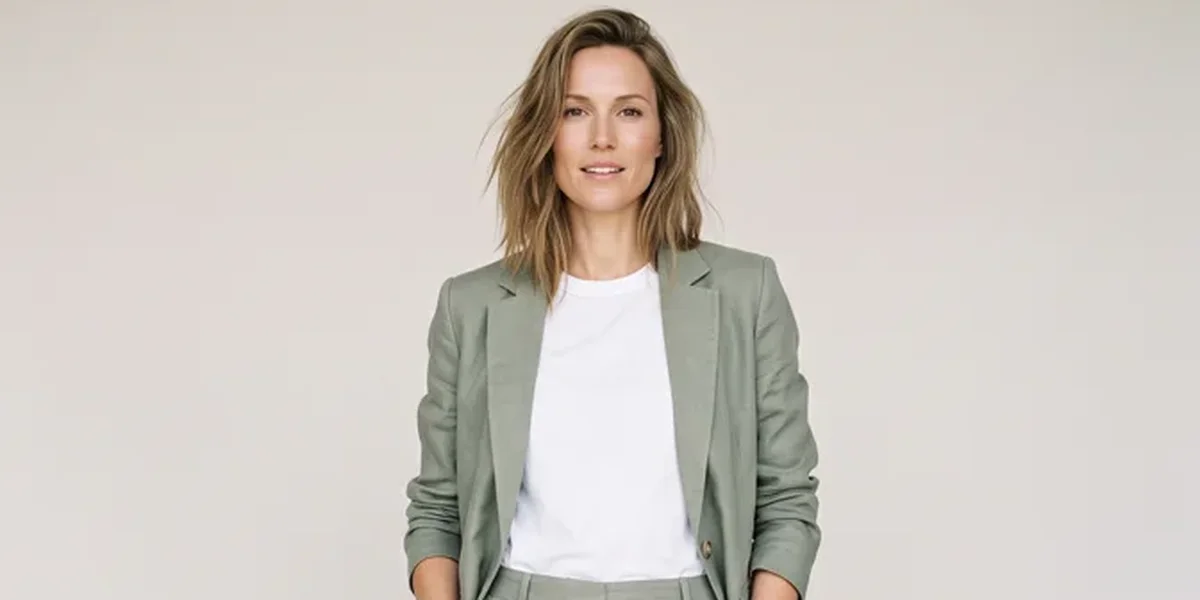
Natural family · What to avoid
A Natural line runs on relaxed, soft Yang ease — so anything that stiffens it into hard tailoring, or dresses it up in ornate fuss, works against the whole shape. Most mistakes here come from reaching for a look that belongs to a different type entirely: something crisper and more constructed, or something smaller and more delicate, rather than the loose, geometric middle that’s actually yours. The avoids below are grouped by which direction they pull you off that line, with a plainer alternative next to each one.
Sharp and severely tailored
Crisp construction and razor-straight lines fight the loose, easy quality that makes this line read as yours — on you, that precision reads stiff rather than sharp-chic. Save the razor edge for a Dramatic; your bone structure doesn’t need that much help to hold a shape.
- Sharply angular or severely straight lines; sharp geometric shapes.
- Severely tailored, tightly constructed, or cropped jackets and blouses.
- Severely straight or long, pencil-slim skirts; severely tailored dresses.
- A relaxed, straight silhouette, softly tailored or unconstructed.
- Long, loose jackets and simple open-neck blouses.
- Simple straight skirts and unconstructed dresses with a dropped or loose waist.
Oversized, full, and flouncy
The opposite extreme misses just as badly — a shape with no structure at all, or one piled with gathers and flounces, buries the clean line underneath it. That much fabric working against your frame just reads as swamped rather than soft.
- Oversized, shapeless silhouettes; flowing, swirling, or overly ornate lines.
- Peplums and nipped-in jacket waists; frilly blouses; overly fluffy, trimmed sweaters.
- Full, gathered, or accordion-pleated skirts; draped, tapered pants with a gathered waist; flouncy or extremely wide dresses.
- A narrow, easy silhouette that keeps its own shape.
- Long cardigans and blousons with a dropped waist; simple open blouses; thick, nubby sweaters.
- Simple pleats or slits; straight, unconstructed pants; wrap or blouson dresses.
Fussy, ornate, and delicate
Small, precious, or heavily trimmed pieces read like an afterthought on this scale — the wardrobe wants plain and simple, not intricate. A tiny, dainty accessory tends to disappear against your build rather than adding polish to it.
- Ornate, intricate, or closed, restrictive detail.
- Overly delicate or strappy bags and shoes with heavy ornamentation; small, crisp, or severe hats; lacy hosiery.
- Ornate, antique, or dangly jewelry; small, symmetrical, classic pieces.
- Minimal, unconstructed detail with open, simple necklines.
- Moderate unconstructed bags, simple tailored shoes, big loose hats, flesh-tone or bright hosiery.
- Chunky, soft-edged jewelry — handcrafted or bold costume pieces.
Sheer, clingy, or flimsy fabric
Fabric that can’t hold its own shape undercuts the easy structure this line depends on — a soft silhouette still needs something with a little body to it underneath.
- Sheer fabric.
- Clingy fabric outside of knits.
- Flimsy, insubstantial cloth.
- Soft, rough, or nubby textures that wrinkle and drape with ease.
- Knits in any weight; plush velour, suede, or soft leather.
- A matte finish for daytime, saved shine for evening.
Flat color and fussy pattern
A single flat note, or a print gone too tight and precious, drains the energy this line is built to carry — color is meant to be one of the easiest, most playful parts of dressing this type.
- Monochromatic dressing, unless the fabric is richly textured.
- Small, symmetrical, or watercolor prints.
- Extremely angular, ornate, or oversized prints.
- Vivid, bright, or pastel color, mixed without needing it to match.
- Textured neutrals lifted with one loud accent color.
- Casual, irregular prints in a moderate-to-large scale with soft, blended edges.
Overworked hair, harsh color, and a stark face
Anything too polished, too processed, or too bare works against the same fresh, unfinished-on-purpose quality that runs through the rest of this line. The test is simple: does it look like effort, or does it look like ease? On you, ease wins every time.
- Sleek, smooth, or severely geometric haircuts; blunt-edged or boyishly cropped styles; overly groomed, set, or teased hair.
- Obviously artificial haircolor or heavy overhighlighting.
- A stark, high-contrast face with no soft color; overly colorful or overly sparkly makeup; no makeup, or eye makeup with nothing else.
- A loose, tousled, layered cut with a feathered outline.
- A natural-reading haircolor from an overall color process, with subtle sun-added streaks if your contrast runs low.
- A soft, well-blended face — muted color with one hint of brightness, soft blush, and glossy lips.
Taken together, these six groups all point the same direction: this line rewards restraint over extremes in either direction. Skip the impulse to armor up with stiff tailoring, and skip the impulse to overcompensate with fuss or shine — the plain, unforced version of any Natural piece is usually the right one.
Want the full picture? Take the quiz to confirm your type, or head back to the Natural hub.
Unofficial guide inspired by the Image Identity system in David Kibbe’s Metamorphosis (1987). Body types describe line, not worth — every type is the goal, not a consolation prize.