Gamine Hair & Color Guide
Gamine family · Hair & Color
Your cut
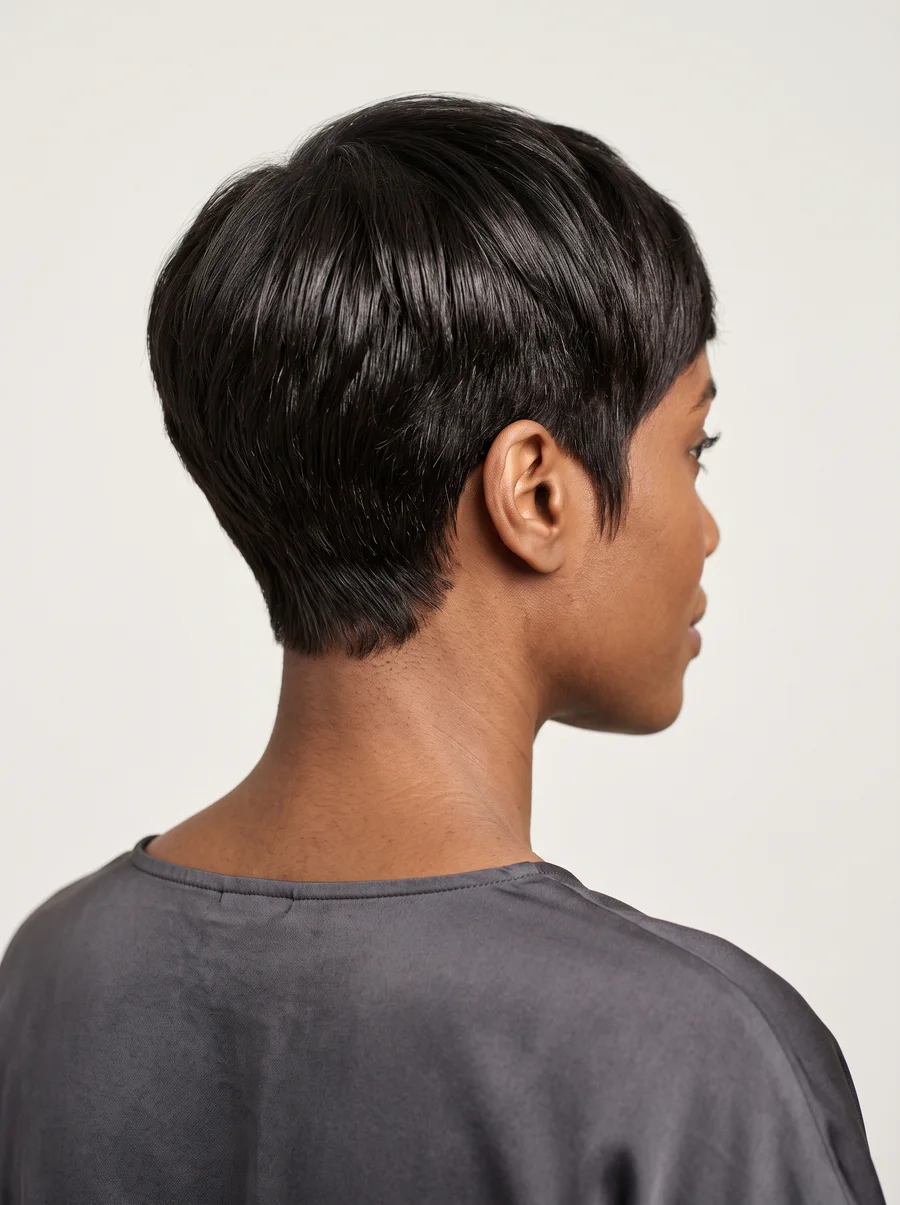
Short is the starting point, tousled is the finish. Your best cut sits close and cropped, with the ends flicked or lifted upward rather than lying flat, and a little extra length worked in around the temples, sides, or bangs to keep a sharply geometric shape from turning severe. Kibbe has a name for this exact effect: “boyish chic” — a cut that reads structured up close but playful from across the room, which lines up neatly with the push-pull of sharp bone and soft, wide eyes that defines you.
Length is where this goes wrong fastest. Anything long buries the eyes and jawline that make your face read as Gamine in the first place, so cropped is really the only direction worth exploring. Beyond that, steer clear of a cut so smooth and blunt-edged it loses all its texture, or one so heavily styled and sprayed into place that the tousled, just-got-out-of-bed spirit disappears.
Whatever your natural texture — fine and silky is common, but any type is possible — the cut should always leave the face open. A stylist who understands that the point is texture and movement rather than a flawless blowout will serve you better than one chasing a smooth, polished finish.
- Long hair — it hides the face more than almost anything else you could choose.
- Severe, unfeathered cuts, heavy blunt bangs, or smooth, blow-dried, overly polished styles.
- Teased, stiff, or heavily coiffed shapes.
Your haircolor
Rich and unmistakable is the target, whatever shade you land on. You can push a genuinely dramatic change — blue-black, a deep brunette, platinum, a fiery red — provided it stays true to your undertone and keeps that vivid three-way contrast between your eyes, skin, and hair intact; if you add highlights, make them obvious streaks rather than a quiet blend. Match your natural undertone and contrast level to the chart below for a starting shade.
| Warm skin (golden) | Cool skin (blue) | |
|---|---|---|
| High-Contrast | Deep to Medium Chestnut Brown; Deep Mahogany or Deep Auburn; Warm White; cover gray completely | Black; Dark Ash Brown (no highlights); Silver or White; bold streaks of Silver or White; gray may stay if dramatically streaked |
| Low-Contrast | Medium to Light Golden Brown; Deep to Bright Auburn; Bright Strawberry; Bright Golden Blond; Warm White; cover gray completely | Medium to Soft Ash Brown; Deep to Pale Ash Blond; bold streaks of Ash Blond; Soft White; cover gray completely unless totally gray |
An all-over color process is generally your strongest move — save highlighting for a genuinely dramatic sweep, or for a base shade that’s already fairly light. Whatever you choose, it needs to stay distinct rather than soft. If you’re cool-toned and high-contrast, gray doesn’t have to disappear either — worked in as a bold, dramatically streaked statement, it can read as another form of vivid contrast rather than something to erase; everyone else does best covering it completely.
- Any dye job aimed at muting or gentling your natural intensity — on you, it reads tired and aging rather than soft.
Your palette
The same distinct, high-voltage logic that governs your hair runs straight through to your clothes. Multicolored combinations, sharp contrast, and the occasional shockingly bright accessory against a plain background are where this line lives — a single muted color story from head to toe is the one move that genuinely works against you, since it drains the personality out of an outfit built to have plenty of it. Prints follow the same instinct: small, sharp geometrics and asymmetric shapes, played with wit rather than realism, keep the whole look animated instead of static.
- Bright, multicolored combinations and high, sharp contrast throughout an outfit.
- Let one accessory carry the punch — a single loud color dropped onto an otherwise stripped-back, neutral outfit.
- Small, sharp geometric or asymmetric prints with a playful, contemporary edge.
Between the cut, the color, and the palette, the thread never changes: definition and contrast are what read as you, and anything designed to soften or blend that away consistently backfires. Treat every choice on this page as one more chance to make the same statement — sharp, bright, and unmistakably distinct — rather than a separate decision made on its own terms.
Want the full picture? Take the quiz to confirm your type, or head back to the Gamine hub.
Unofficial guide inspired by the Image Identity system in David Kibbe’s Metamorphosis (1987). Body types describe line, not worth — every type is the goal, not a consolation prize.