What Gamines Should Never Wear (and What to Wear Instead)
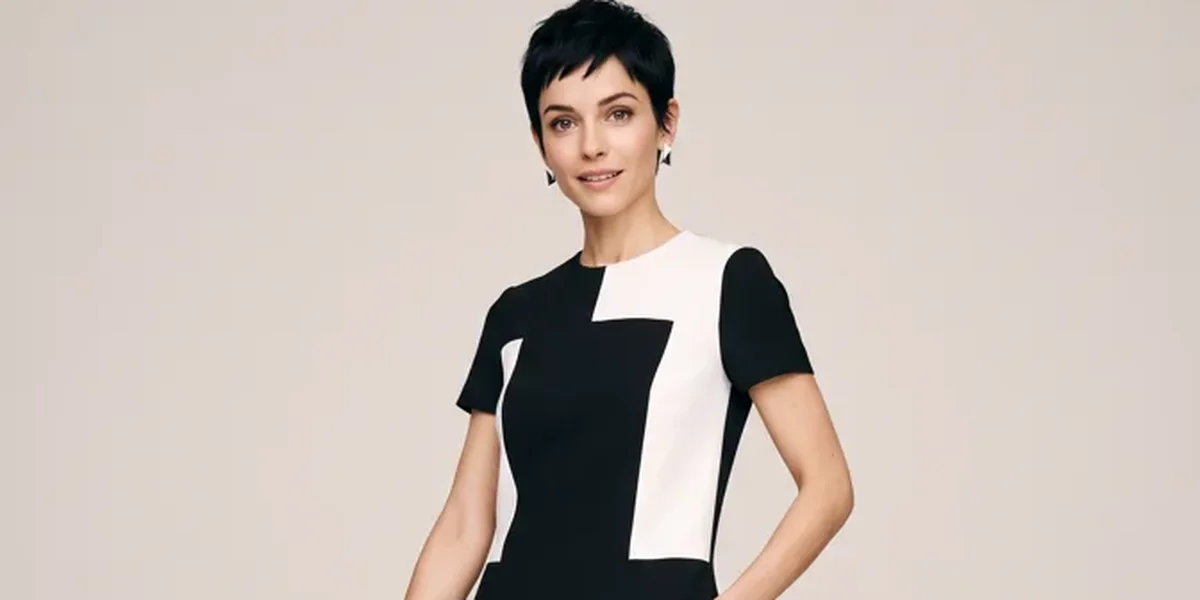
Gamine family · What to avoid
A Gamine’s whole appeal comes from holding two opposite energies at once — petite and soft-eyed on one side, sharp and angular on the other — so anything that drowns one half in favor of the other flattens the very contradiction that makes the look work. The categories below aren’t arbitrary bans; each one erases either the scale or the edge that your line depends on. Treat them less as rules to memorize and more as a quick gut check: does this piece add definition, or does it quietly sand it away.
Oversized, loose, or flowing
Anything that adds bulk or lets fabric hang loose swallows a frame built on precision and small scale. A big, sweeping silhouette doesn’t read as relaxed on you — it just reads as the wrong size, and the same goes for accessories: an oversized bag or belt overwhelms your hands the same way an oversized coat overwhelms your body.
- Oversized, unconstructed, or flowing silhouettes and shapes.
- Full or flouncy skirts and dresses; baggy or draped pants.
- Long jackets, oversized sweaters, and heavy, rough, or sheer fabric.
- Oversized bags, floppy hats, and heavy or bulky belts.
- Small, sharp, precision-fitted geometrics throughout.
- Straight, short, tapered skirts; sharply tailored, cropped pants.
- Cropped, fitted jackets and skinny ribbed sweaters in crisp, matte fabric.
- Small geometric bags, crisply tailored caps, and stiff geometric-buckled belts.
Long, smooth, or unbroken lines
A long, flowing line asks for a body built to carry length. Yours is built to carry breaks — short segments, sharp corners, staccato rhythm — so a smooth continuous sweep just goes flat on you. Even hosiery is part of this: one unbroken line of solid dark color down the leg reads as a missed opportunity rather than a clean finish.
- Elongated, smooth, or curved silhouette lines.
- Symmetrical outlines and plain, undetailed garments.
- Long hemlines on skirts and dresses.
- One long, unbroken line of solid, especially dark, hosiery.
- A broken, staccato outline built from short, crisp segments.
- Asymmetrical hemlines, especially with a 1920s flapper spirit.
- Short, tapered hemlines from mid-knee up through mini.
- Hosiery that contrasts with shoe and hemline shades instead of blending.
Fussy, delicate, or ornate
Delicate, intricate trim asks to be admired up close and slowly — the opposite of the quick, sharp read your scale is built for. Fussy detail gets lost on you, or worse, looks borrowed from someone else’s closet. The same goes for anything heavy or ornate in jewelry and hats: a chunky antique piece or a floppy, oversized hat competes with your features instead of framing them.
- Anything fussy, fragile, or heavily embellished in shape or detail.
- Watercolor, realistic, or overly intricate prints.
- Antique or rococo-style jewelry, and delicate, overly strappy shoes.
- Small, sharp, geometric detail in abundance — piping, braid, beads.
- Small geometric or angular asymmetric prints, contemporary or witty.
- Contemporary, avant-garde jewelry and tailored, angular shoes.
Monochromatic, neutral, or muted
A single quiet color story reads like a costume change for the wrong type — the point of your palette is contrast and spark, not restraint. This runs through makeup too: a face with no real color, or an all-frosted finish, undercuts the same drama your clothes are working to build.
- Monochromatic color schemes.
- Neutrals used as anything more than an accessory, unless pushed to extreme dark or light.
- A neutral, “no makeup” face, or overly frosted color with no real depth.
- Bold, multicolored combinations and high, sharp color contrast.
- Bright, shockingly colored accessories set against a backdrop pushed to a plain extreme.
- A smoky, defined eye paired with deep, saturated cheek and lip color.
Long hair and softened color
Length hides the face, and a softened shade dulls the contrast — both work directly against the features that make you read as Gamine. A heavily blown-out, overly polished style falls into the same trap, trading your natural texture for a smoothness that was never really the goal.
- Long hair, and severe cuts with no feathering or texture.
- Haircolor chosen to “soften” your natural look.
- A short, tousled, boyish-chic cut with layering around the face.
- Rich, distinct haircolor, processed as an overall color rather than a subtle blend.
Want the full picture? Take the quiz to confirm your type, or head back to the Gamine hub.
Unofficial guide inspired by the Image Identity system in David Kibbe’s Metamorphosis (1987). Body types describe line, not worth — every type is the goal, not a consolation prize.