Flamboyant Gamine Hair & Color Guide
Gamine family · Hair & Color
Your cut
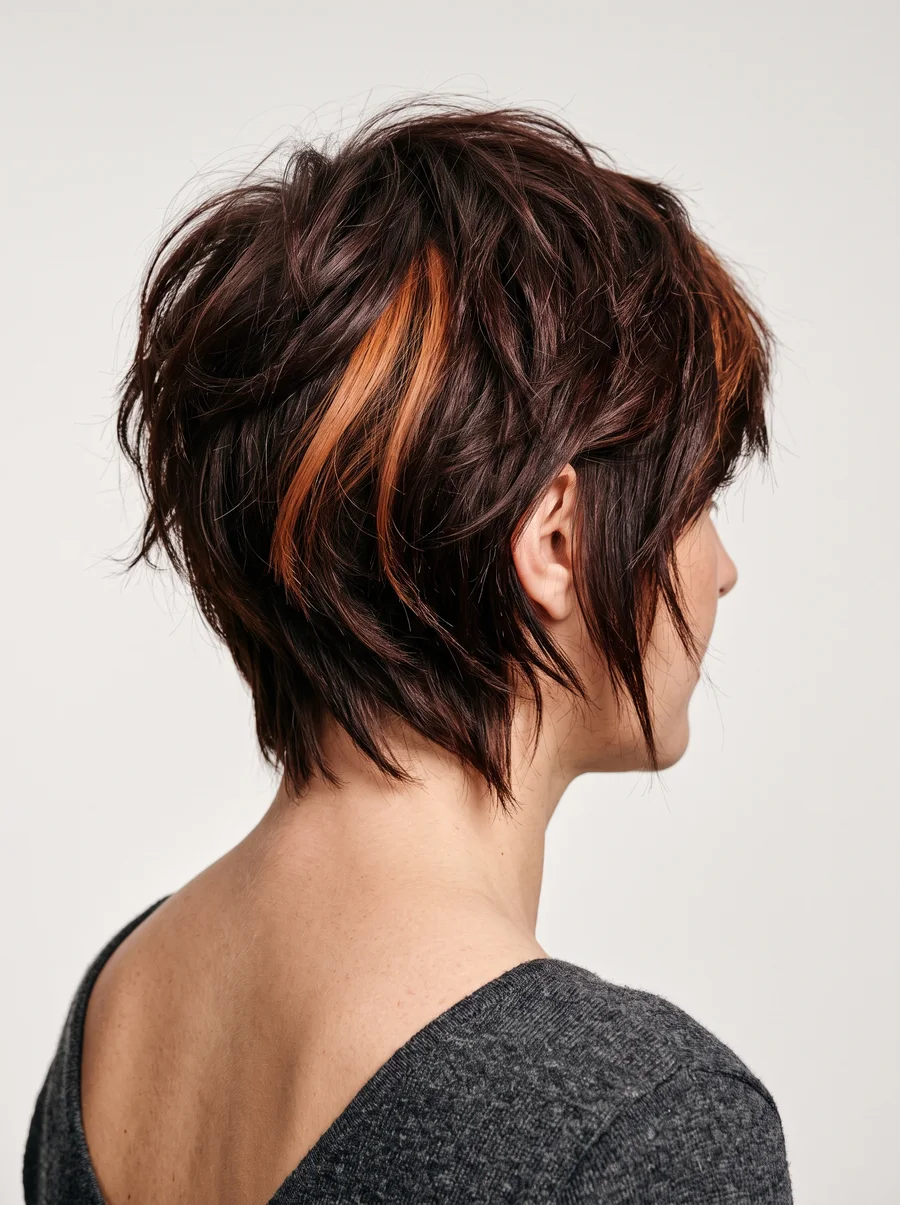
Sculpted and asymmetric, or tousled and boyish — either direction works, as long as the outline stays geometric with just enough layering or beveling at the edges to keep it from looking severe. Kibbe’s shorthand for this is “Boyishly Chic,” and it’s really a sophistication move: short hair shows off the eyes, which are doing most of the work in your face, so anything that curtains them undercuts the whole effect. Because your overall style is meant to feel eclectic and a little unexpected, a genuinely wild cut is fair game — asymmetrical dips, dramatic side sweeps, an uneven fringe. Just budget for upkeep; a sharply shaped cut needs regular trims to hold its edge, and trend-driven shapes tend to date fast.
Long hair isn’t off the table entirely, but it’s a commitment — it only works with a genuinely flamboyant, high-maintenance styling routine (teasing, setting, plenty of product), and without that effort it reads as flat rather than dramatic. Short is simply the lower-risk, higher-reward choice.
Texture is where you have real range: fine, straight hair can be cut into something crisply sculpted, while thick, wavy, or curly hair can carry a bigger, more textured version of the same asymmetric idea. Either way, the goal is a shape that looks considered rather than accidental, with just enough looseness to keep it from tipping into severity.
- Blunt, symmetrical cuts with no asymmetric edge or tousled fringe.
- Overly ornate, teased, or curly styles, or a flat, unshaped wash-and-wear cut.
- Long hair without a serious styling commitment, or any style that curtains the eyes.
Your haircolor
Distinct and rich, never softened, is the rule. If you’re coloring, choose something clear and vivid rather than muted, and if you’re in the mood for drama, a theatrical shade — platinum, a deep fiery red, even blue-black — is well within reach; otherwise, stay close to your natural shade. Covering gray or deepening your color both call for a full color process rather than a scattering of subtle highlights.
| Warm skin (golden) | Cool skin (blue) | |
|---|---|---|
| High-Contrast | Deep to Medium Chestnut Brown; Deep Mahogany or Deep Auburn; Warm White; cover gray completely | Black; Dark Ash Brown (no highlights); Silver or White; bold streaks of Silver, White, or vivid colors; gray may stay if dramatically streaked |
| Low-Contrast | Light Golden Brown with warm streaks; Deep Honey Blond with warm streaks; Bright Auburn; Bright Golden Blond with Yellow streaks; Warm White; cover gray completely | Medium to Soft Ash Brown with Ash streaks; Deep to Pale Ash Blond with Ash streaks; Soft White or Silver Gray; bold streaks of Silver or White; cover gray until completely turned |
An overall process is what gives this color its distinctness, though if your natural shade sits in the low-contrast range, a dramatically streaked set of highlights can lift the color without softening it. Once you’re covering gray, switch fully to an overall process rather than mixing in highlights. Even here, the cool high-contrast column leaves room to keep gray rather than cover it, as long as it’s worked in as a bold, deliberate streak rather than left to blend in evenly.
- Any process designed to “soften” the haircolor — it leaves the whole look washed out rather than gentler.
Your palette
Carry that same distinct, unsoftened instinct into your clothes. Wild, unexpected color pairings read as fresh rather than clashing on you, no matter how extreme the backdrop behind them runs, and a single primary shade is best treated as a base for bold accent color rather than the whole story. When it comes to pattern, size can run moderate to large, and mixing two prints that don’t obviously belong together works as long as color threads them into one look.
- Wild, original color combinations regardless of how extreme the backdrop runs.
- One primary shade animated with bold accent color rather than left alone.
- Moderate-to-large prints, even mismatched pairs tied together by color.
Across the cut, the color, and the clothes, the same instinct keeps paying off: commit fully to a distinct choice rather than reaching for something softer or safer along the way. That’s the real test for every decision on this page — does it read as deliberate and original, or does it quietly retreat toward something safer than you actually are.
Want the full picture? Take the quiz to confirm your type, or head back to the Flamboyant Gamine hub.
Unofficial guide inspired by the Image Identity system in David Kibbe’s Metamorphosis (1987). Body types describe line, not worth — every type is the goal, not a consolation prize.