What Flamboyant Gamines Should Never Wear (and What to Wear Instead)
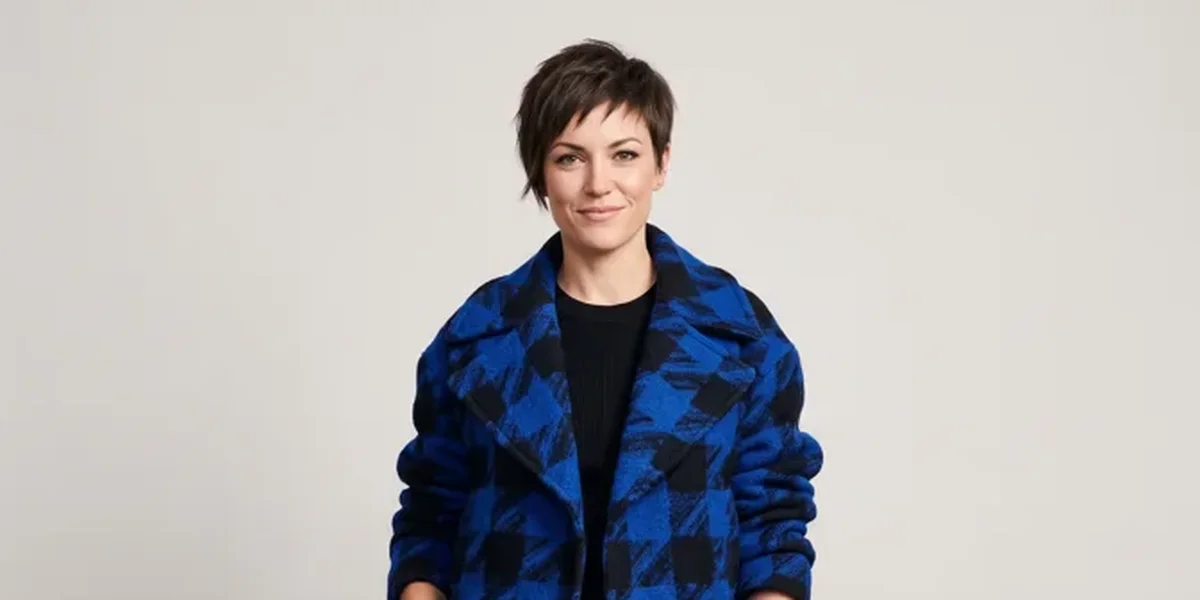
Gamine family · What to avoid
Your line runs on deliberate mismatch — bold, angular shapes paired against each other, broken by asymmetry rather than kept even. Anything symmetrical, delicate, or softly blended erases exactly the tension that makes the look click, which is why the categories below all point back to the same idea: keep it broken, keep it bold. Use them less as a checklist and more as a filter — the same question, asked over and over, of whether a piece adds friction or quietly smooths it away.
Symmetrical and matched
A perfectly even, matched outfit reads as safe rather than sharp on you — the whole point of your line is the deliberate clash between pieces, not a coordinated set. A blended, monochromatic jacket falls into the same trap: it plays down exactly the contrast your bone structure is built to carry.
- Symmetrical, even shapes and outlines.
- Traditional symmetrical skirts, pants, sweaters, and dresses.
- Small, symmetrical, or moderate pocketbooks and jewelry.
- Asymmetric, irregular, or chunky shapes throughout.
- Uneven hemlines and asymmetric detail on skirts, pants, and dresses.
- Angular, asymmetric bags and chunky, sculpted jewelry.
Delicate, fussy, or intricate
Small, precious detail gets swallowed by a bone structure this bold — anything delicate reads as borrowed rather than yours. Frilly blouses and clingy, unstructured fabric read the same way: pretty in theory, lost in practice against a frame built for scale.
- Delicate, intricate, or overly ornate shapes and trim.
- Delicate strappy shoes, fussy belts, and waist-cinchers.
- Jewelry that leans too fragile or fine-detailed.
- Frilly or ultraclingy blouses.
- Bold, angular, sculpted shapes and contrasting trim.
- Chunky, angular shoes and wide, stiff, sculpted belts.
- Chunky sculpted metal, bright enamel, or contemporary Art Deco jewelry.
- Narrow, sculpted blouses, clean necklines dressed up with geometric-shaped trim.
Flat, unbroken, or shapeless
A shapeless or unbroken silhouette leaves nothing for your bold bone structure to push against — it just reads as too much fabric with nowhere to go. Heavy, stiff fabric with nothing lighter nearby to offset it falls into the same category, since bulk without contrast just reads as bulk.
- Unbroken, shapeless, or overly draped silhouettes.
- Wide, unconstructed skirts, pants, and dresses.
- Oversized, unconstructed bags and floppy hats.
- Heavy, stiff fabric with no opposite texture to break it up.
- Broken, boxy outlines with sharply cut edges.
- Sculpted, tailored skirts, pants, and dresses that skim the body’s shape.
- Angular, structured bags and small, sculpted hats.
- A heavier fabric paired deliberately with a lighter, opposite texture.
Muted, monochromatic, or overly soft
A single quiet color, a soft blended print, or a too-neutral face all mute the electricity that’s supposed to define you — this type reads best loud, not hushed. Watercolor blending in makeup does the same damage as a watercolor print in fabric: it softens an edge that’s meant to stay crisp.
- Monochromatic color schemes, or any single shade run head to toe.
- Overly blended pastels, watercolor prints, and small symmetrical florals.
- A subdued, overly neutral, or overly glittery face.
- Watercolor-blended edges anywhere on the face.
- Wild, original color combinations with sharp contrast.
- Prints running from medium up to large-scale, worn in combinations that don’t have to agree with each other.
- A bold, matte face with one strong accent of brightness at the eye.
- A deep to vivid lip and cheek color to balance the strong eye.
Long hair and softened color
Length hides the eyes, and a “softened” haircolor washes out the vivid contrast your whole look depends on. Even a great cut loses the plot if it’s left severely geometric with no texture at the edge to keep it feeling current.
- Long hair without a serious, high-maintenance styling routine.
- Blunt, symmetrical cuts with no asymmetric edge.
- Any color treatment aimed at muting or softening your natural shade.
- Short cuts, either crisply sculpted off-center or rumpled into something boyish.
- Layered, beveled edges that keep a geometric shape from looking severe.
- Distinct, rich haircolor from a full overall process.
Want the full picture? Take the quiz to confirm your type, or head back to the Flamboyant Gamine hub.
Unofficial guide inspired by the Image Identity system in David Kibbe’s Metamorphosis (1987). Body types describe line, not worth — every type is the goal, not a consolation prize.