Classic vs Natural: Which Kibbe Type Are You?
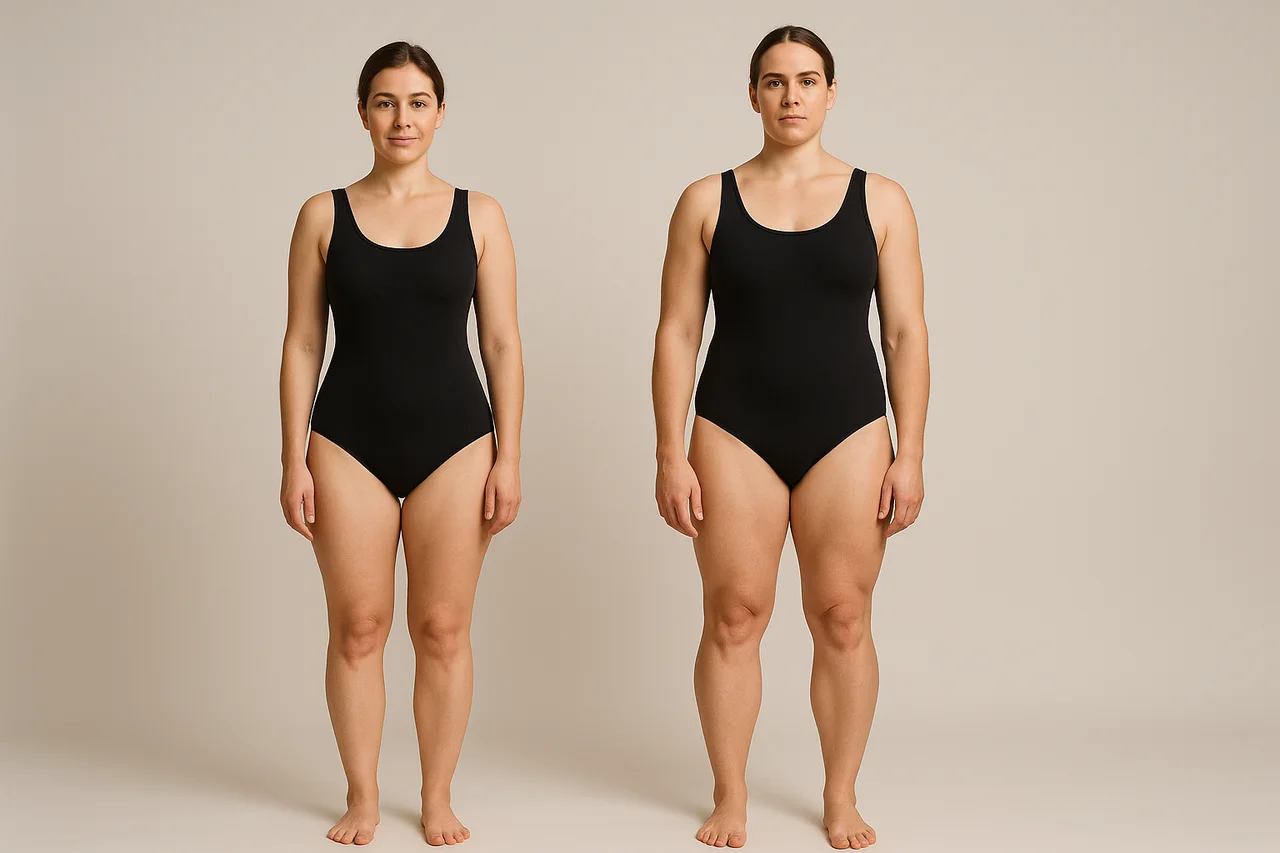
Classic and Natural both sit in the moderate, non-extreme middle of the scale, which is exactly why they’re easy to cross. Neither type is sharp or lush — both read as balanced and approachable. The difference shows up in bone width and in how regular the features are: Classic stays narrow and evenly proportioned, while Natural runs broader and more athletic, with features that are a little less matched to each other.
Classic tells
- Your bone structure is narrow to moderate — shoulders, hands, and feet are never the first thing people notice.
- Your build leans lithe rather than muscular.
- Your features are evenly spaced and symmetrical, with a chiseled rather than blunt quality.
- People tend to describe you as polished or put-together without being able to name a single standout feature.
- Your coloring tends to sit toward the blended middle of the spectrum rather than reading as sharply vivid.
Natural tells
- Your bone structure runs broader — shoulders in particular often look squared or a little wide.
- Your build leans athletic, with visible muscle tone even at a lean weight.
- Your features are a little irregular or asymmetrical, and read as blunt rather than sharply defined.
- People tend to describe you as fresh, easygoing, or outdoorsy.
- Your skin tends to tan or color easily rather than staying pale in the sun.
This is one of the trickier pairs to sort out from a single photo, because both types can look calm, put-together, and unremarkable-in-a-good-way at a glance — neither one is loud. The tell usually shows up the moment you look past the outfit and at the actual skeleton: shoulder width, hand size, and whether the face’s features line up with mathematical evenness or with a slight, appealing irregularity.
The deciding questions
- Are your shoulders narrow and tapered, or broad and square? Narrow points to Classic; broad points to Natural.
- Does your face look evenly matched feature to feature, or does one feature sit a little off from perfect symmetry? Even and matched leans Classic; slightly irregular leans Natural.
- Is your build closer to lithe, or closer to visibly athletic and muscular? Lithe leans Classic; muscular leans Natural.
Let the scoring settle it. Take the quiz — 16 questions, real scoring, no email wall.
Read the full profiles at the Classic hub and the Natural hub.
Quick answers
What’s the fastest way to tell Classic from Natural?
Look at the shoulders and build first — narrow, tapered shoulders and a lithe frame point to Classic, while broad, square shoulders and a more muscular build point to Natural.
Do facial features help tell them apart?
Yes — Classic features sit evenly matched and symmetrical, while Natural features run a little irregular or blunt rather than perfectly even.
Can skin and coloring be a tiebreaker?
Somewhat — Classic coloring tends to sit toward a blended middle range, while Natural skin often tans or colors more easily, though bone structure is the more reliable signal.
Unofficial guide inspired by the Image Identity system in David Kibbe’s Metamorphosis (1987). Body types describe line, not worth — every type is the goal, not a consolation prize.