Classic Hair & Color Guide
Classic family · Hair & Color
Your cut
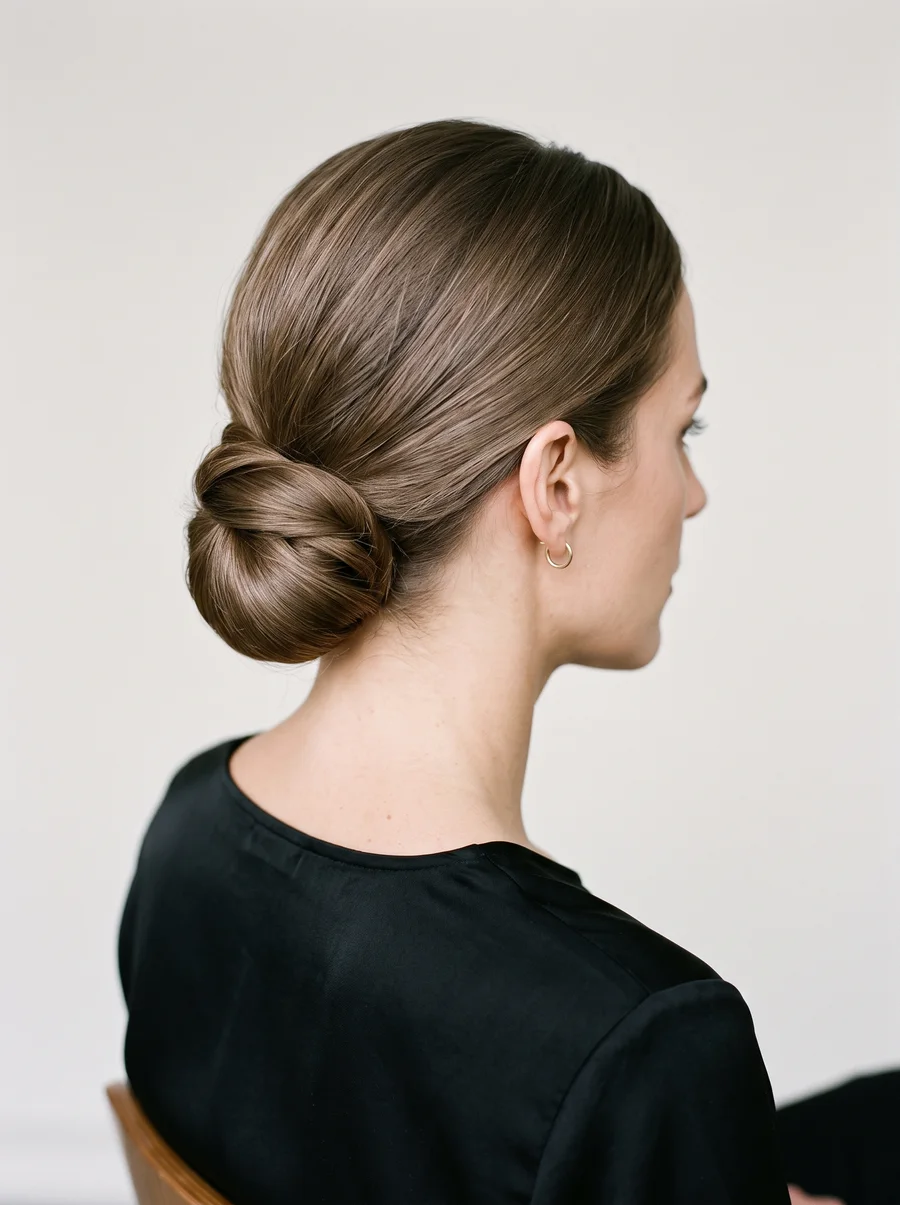
Smooth, sleek, and well-groomed is the whole brief. A blunt-edged cut holds its shape evenly and reads as controlled from every angle, which is exactly the effect your line is built around. If your hair curls heavily on its own, a little layering keeps those curls falling into soft, even waves rather than springing out unpredictably — the goal isn’t to fight the texture, just to keep it looking managed. Moderate length suits you best: long enough to move, short enough to stay tidy.
Think of your hair as one more surface where the same rule applies — even, blended, nothing calling undue attention to itself. A cut that looks engineered for effect, or one that’s left to do whatever it wants, both pull against the balanced picture the rest of your look is building.
- Severe cuts, or cropped, boyish styles.
- Overly layered cuts.
- Wild, trendy, or stiffly teased hair.
Your haircolor
Natural, rich, and subtle is the target — the kind of color that looks like it could always have been there. Lowlights and a soft blended spray of tone do far more for you than heavy highlights or obvious streaking, which tend to break up the smooth, even finish that’s your signature. Sort your options by your skin’s undertone (warm or cool) and how much contrast sits between your skin and your natural hair color — a wide gap reads high-contrast, a close one reads low-contrast.
| Warm skin (golden) | Cool skin (blue) | |
|---|---|---|
| High-Contrast | Chestnut Brown with subtle Red lights; Medium Auburn with subtle golden lights; Medium Golden Brown; Warm White; cover gray unless totally gray | Dark to Medium Ash Brown (no highlights); Silver; White; may leave gray as it comes in or re-create the original color |
| Low-Contrast | Light Golden Brown; Rich Honey Blond with subtle golden lights; Golden Blond; Strawberry Blond; Light Auburn with golden lights; Warm White; cover gray unless totally gray | Medium to Soft Ash Brown with subtle Ash lights; Medium to Light Ash Blond with subtle Ash lights; Soft Silver or Soft White; may leave gray or re-create the original color |
Very dark hair generally looks best with a full overall color process rather than pieced-in highlights, while medium-to-light hair can take a subtle highlight for a little extra lift. One rule holds regardless of where you start: once you begin covering gray, commit to an all-over process going forward — a highlight alone won’t cover it evenly, and the untouched color around it will fade and lose its match.
- Theatrical haircolors — blue-black, platinum, fiery red — unless that happens to be your natural shade.
Your palette
Where hair and makeup ask for smooth, blended tone, your clothing palette asks for the same idea applied to an entire outfit: keep intensities close together rather than setting bold against bold. A monochromatic outfit is one of your strongest moves — not a single flat color, but a stack of related tones that read as one unbroken statement from collar to hem. Neutrals earn their keep here too; in a genuinely fine fabric, a neutral looks rich rather than plain. When you do reach for pattern, keep it small, regular, and evenly spaced — pin dots, pinstripes, checks, blended plaids, herringbones, symmetrical paisleys — so the print supports the line instead of interrupting it.
- Blended intensities within one outfit rather than sharp contrast.
- Monochromatic dressing across a range of related tones.
- Rich neutrals in high-quality fabric.
- Sharp color contrast or multicolor, mix-and-match combinations.
Want the full picture? Take the quiz to confirm your type, or head back to the Classic hub.
Unofficial guide inspired by the Image Identity system in David Kibbe’s Metamorphosis (1987). Body types describe line, not worth — every type is the goal, not a consolation prize.