Soft Classic vs Soft Natural: Which Kibbe Type Are You?
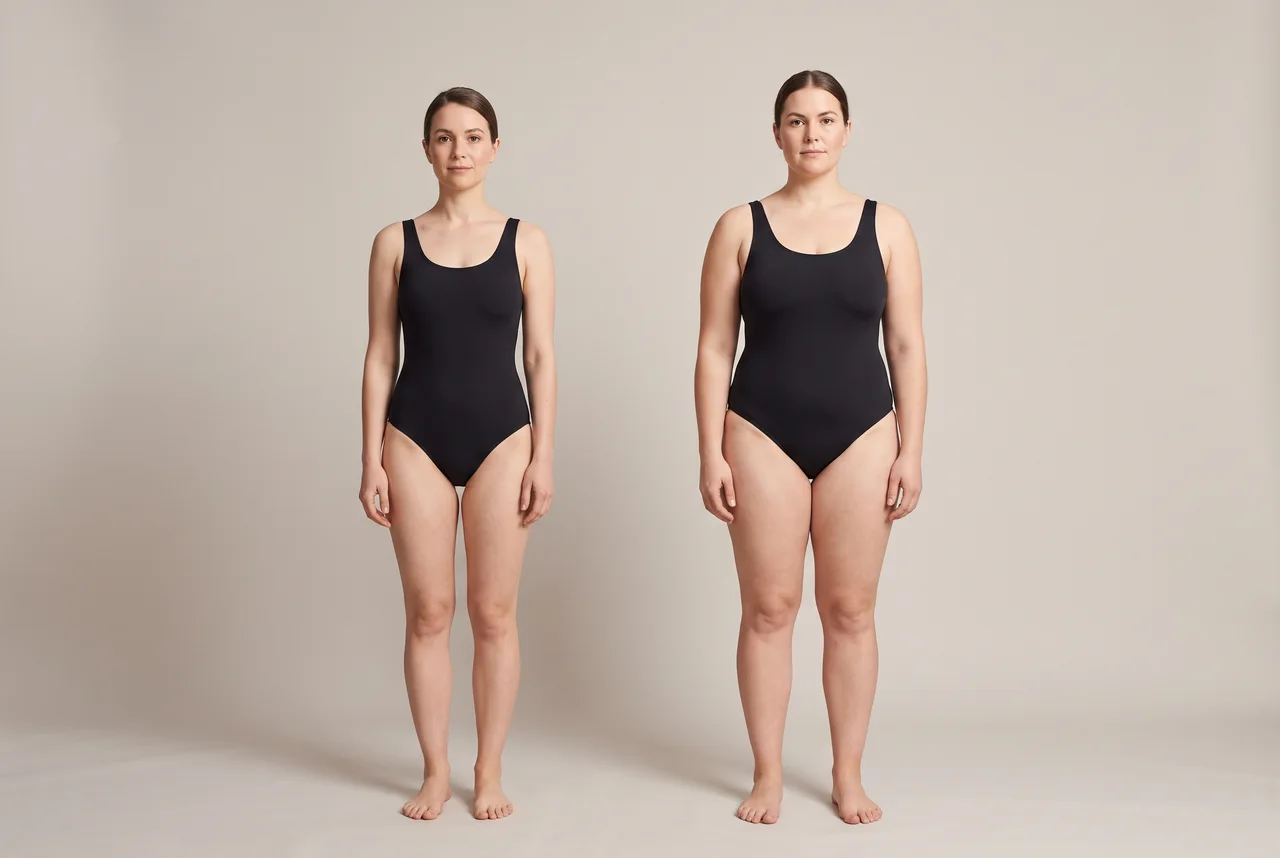
Soft Classic and Soft Natural both take a moderate, non-extreme bone structure and add a gentle, fleshy body on top of it — which is where the resemblance starts and ends. The bones themselves tell the story: Soft Classic’s frame stays symmetrical and even, while Soft Natural’s frame carries a slightly angular, broader quality even though it’s still described as delicate.
Soft Classic tells
- Your bone structure is symmetrical and even — shoulders, jaw, and hands all match each other in proportion.
- Your body carries a slight, gentle softness, tending toward fleshiness rather than muscle tone.
- Your features are soft, full, and evenly spaced.
- People describe you as gracious or refined more than athletic.
- Your hands and feet stay moderate and softly shaped, without a squared edge.
Soft Natural tells
- Your bone structure has a slight angularity to it, and runs a touch wider than a Soft Classic’s, even though it still reads as delicate overall.
- Your body carries some muscle tone underneath the softness, rather than pure fleshiness.
- Your features are full and rounded, with a slightly blunt or irregular quality here and there.
- People describe you as approachable and fresh more than polished.
- Your hands and feet can look moderate to slightly large, with a hint of squareness.
Because both types carry a gentle, fleshy softness on top of a moderate frame, the resemblance can look strong from a distance. Up close, the bones themselves are the giveaway: an evenly matched, symmetrical frame belongs to one, while a frame that’s just slightly wider or carries a touch of angularity — even under all that softness — belongs to the other.
The deciding questions
- Is your bone structure evenly matched and symmetrical, or does it carry a slight angular edge? Even and matched leans Soft Classic; a hint of angle leans Soft Natural.
- Does your body lean toward soft fleshiness, or soft-with-some-muscle-tone underneath? Pure softness points to Soft Classic; a bit of muscle points to Soft Natural.
- Are your facial features evenly spaced, or slightly irregular? Even leans Soft Classic; slightly irregular leans Soft Natural.
Let the scoring settle it. Take the quiz — 16 questions, real scoring, no email wall.
Read the full profiles at the Soft Classic hub and the Soft Natural hub.
Quick answers
What’s the quickest way to separate Soft Classic from Soft Natural?
Check the bone structure first — Soft Classic stays symmetrical and even, while Soft Natural carries a slightly angular, broader quality even under the softness.
Does body texture help?
Yes — Soft Classic leans toward pure fleshiness, while Soft Natural carries some muscle tone underneath its softness.
What about the face?
Soft Classic features read soft, full, and evenly spaced, while Soft Natural features are full and rounded but with a slightly blunt or irregular quality.
Unofficial guide inspired by the Image Identity system in David Kibbe’s Metamorphosis (1987). Body types describe line, not worth — every type is the goal, not a consolation prize.