What Soft Naturals Should Never Wear (and What to Wear Instead)
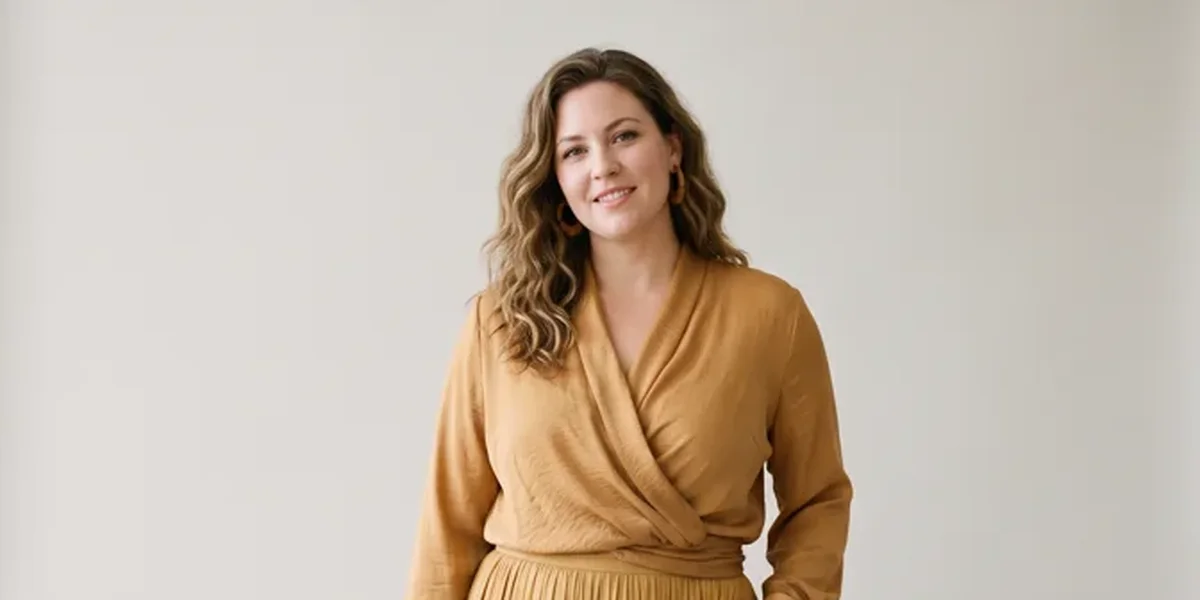
Natural family · What to avoid
A Natural line wants ease more than anything — clean, direct, unforced. The Romantic thread layered on top of that is meant to stay a small, creative accent, not take over as fussy over-decoration, and it should never get edited out so far that the whole look turns stiff and severe. Most of what to skip below comes from tipping too far toward one of those extremes, in either direction, rather than from any single rule about a specific piece.
Sharp, severe, or stiff
Anything that snaps into a hard line or a stiff shape belongs to a straighter type, not to you — it fights the drape and warmth your line runs on. The bone structure underneath is angular enough to hold its own without extra help from rigid construction, so stiffness on top just reads as armor rather than polish.
- Sharp geometric shapes and severe, stiff silhouettes.
- Stiff, flat-surfaced, or overly flimsy fabric.
- Severely or stiffly tailored jackets, blouses, pants, and dresses; severe man-tailored pants and hats.
- Crisply structured bags, stiff belts, and extremely angular, heavy shoes.
- Severe geometric or stark avant-garde jewelry, and heavy chunky pieces.
- Severe, geometric, or blunt-edged symmetrical haircuts.
- Relaxed, rounded shapes with soft, unconstructed shaping through the waist.
- Soft-textured, plush, or gently rough fabric with fluid movement.
- Unconstructed jackets, soft blouses, and draped pants and dresses shaped through the waist.
- Softly rounded bags, supple wide belts, and tapered, delicate shoes.
- Creative, original jewelry in unusual materials, delicate in craft but inventive in effect.
- A loosely layered cut with soft movement.
Wide, shapeless, or boxy
A shape with no waist and no movement erases the curve that makes this line work — you want ease, not a tent.
- Wide, chunky, or boxy shapes; wide, shapeless silhouettes.
- Long, boxy jackets and wide, shapeless pants.
- Shapeless blouses and dresses.
- Heavy sweaters that swallow your shape.
- Irregular curved shapes — wide circles, loose ellipses, easy swirls.
- Waist-shaped jackets, or longer belted styles that still show your line.
- Softly draped blouses and dresses that loosely suggest the waist.
- Lightweight, luxurious knits that skim rather than hide the body.
Overly fitted and fussy
The opposite extreme is just as much of a problem — a shape pinned down with fussy trim or squeezed into a fitted seam reads as strained rather than styled.
- Fitted silhouettes and overly ornate shapes.
- Cropped bolero or flouncy, overly trimmed jackets; fussy blouse necklines.
- Overly fitted skirts, pants, or dresses loaded with trim; skirts cut long, narrow, and pencil-straight.
- Animated, overly fitted, or fussy detail; overly intricate or “cute” perky prints.
- Small, crisp caps, and overly ornate or stylized hair (outside a genuinely original evening look).
- A loosely defined waist — blousy tops, dropped waistlines, hip drape.
- Straight or full skirts with soft detail like shirring or a slit, kept unrestrictive.
- Soft, moderate-to-large prints in rounded, slightly irregular shapes.
- Soft, floppy, or clean rounded hats, and a loosely layered, softly tousled cut.
Plain, symmetrical, or bare
Perfect symmetry and total plainness both undersell the creative spark this line depends on — a little irregularity and a little embellishment are doing real work, not just decoration.
- Plain, symmetrical shapes and silhouettes.
- Symmetrical A-line skirts, plain symmetrical pants, and plain symmetrical dresses.
- Small, symmetrical, or severely geometric prints.
- No detail at all, and a minimal “no jewelry” look.
- Boyishly cropped hair.
- Asymmetric, irregular curves and easy swirls.
- Flared or full skirts sitting flat through the hip; soft, unconstructed pants and dresses.
- Watercolor-blended or electric prints with soft, irregular edges.
- Loose, slightly intricate, antique-touched detail, and at least a little original jewelry.
- A moderate-to-long, loosely layered cut.
Stark, dull, or theatrical color
Color and haircolor both want richness — either extreme, washed-out or theatrically bold, works against the natural warmth this line is built on. A face and wardrobe built for radiance need genuine depth of color to read as intentional rather than accidental.
- Dull, monochromatic color schemes, or an outfit that’s dark from top to bottom.
- One unbroken line of dark hosiery.
- Boldly theatrical haircolor — blue-black, platinum, straw-yellow blond, fiery red — or hair lightened well past its natural depth.
- A toned-down face stripped of every warm or vivid shade.
- Vibrant brights and soft pastels, with dark shades used as an accent.
- Flesh-toned or soft opaque hosiery for daytime; bright or textured styles for evening.
- Rich, natural-looking haircolor from a full overall color process, with subtle highlights only if you’re low-contrast.
- A radiant face: soft-to-bright blended eye and cheek color, glossy lips.
Want the full picture? Take the quiz to confirm your type, or head back to the Soft Natural hub.
Unofficial guide inspired by the Image Identity system in David Kibbe’s Metamorphosis (1987). Body types describe line, not worth — every type is the goal, not a consolation prize.