What Soft Dramatics Should Never Wear (and What to Wear Instead)
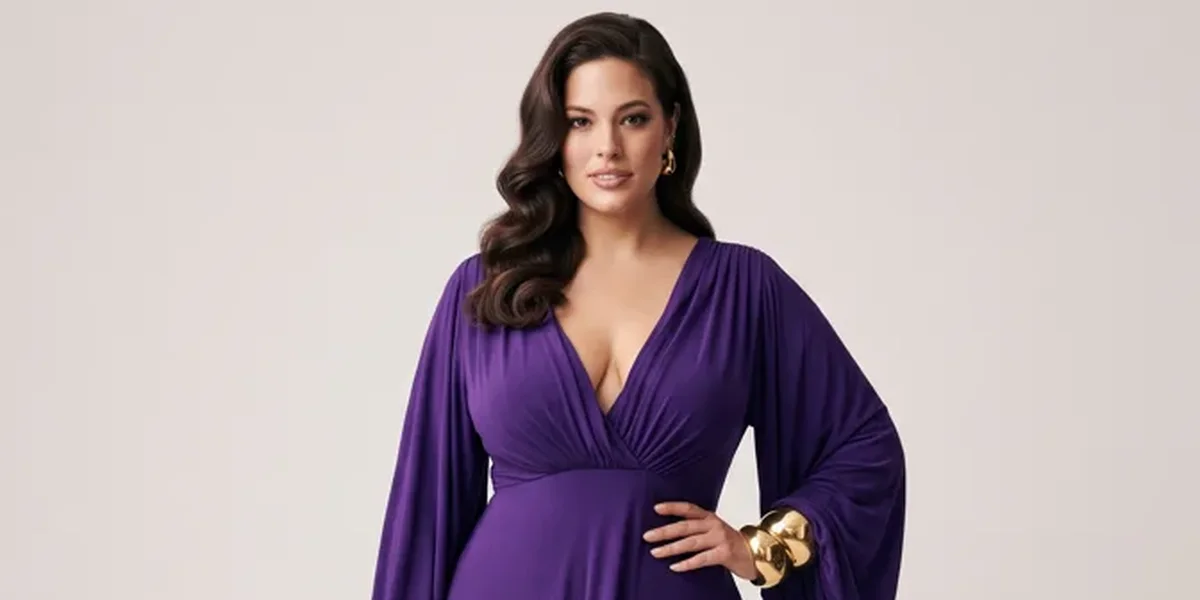
Dramatic family · What to avoid
Your line runs on a balance: bold, large-scale Yang softened by a draped, sensual Yin undercurrent. Lean too hard toward stiff and minimal, and you lose the softness that makes the look yours; lean too hard toward small and delicate, and the scale disappears entirely. The avoids below are the things that break that balance in one direction or the other. Because the Yang base has to stay dominant, with the Yin only ever added on top, most of these avoids come down to one of two mistakes: reaching for the sharp, severe version of a piece that belongs to a straight Dramatic, or reaching for the small, delicate version that belongs to a more petite type entirely. Keep that two-sided test in mind and most wardrobe decisions sort themselves out quickly.
Stiff, sharp, and severely tailored
Crisp tailoring and sharp edges belong to the straight Dramatic, not to you — on your frame they read as hard rather than commanding, and they fight the drape your line depends on. Your bone structure is bold enough to carry a strong shoulder or a big silhouette without any help from stiff construction; adding that stiffness on top just makes the whole look feel armored instead of glamorous.
- Sharp-edged geometrics; stiffly tailored lines.
- Stiffly tailored jackets with sharp edges, traditional blazers, or short cropped jackets.
- Sharply or stiffly tailored pants, skirts, or blouses.
- Bold geometrics with soft edges; the “T” silhouette of broad shoulders over a draped vertical line.
- Long, broad-shouldered jackets in lightweight draping fabric.
- Straight, long, draped pants and skirts.
Small and delicate
Anything scaled down or fussy — a small print, a delicate necklace, a fitted seam — reads as an afterthought on a frame built for bold, sweeping statements. Scale is really the whole story here: your bone structure, your features, and your presence are all large, so anything sized for a petite frame ends up looking borrowed rather than chosen.
- Small delicate shapes; small delicate or minimal detail.
- Small symmetrical prints, or delicate and fussy prints.
- Delicate antique jewelry, simple symmetrical pieces, small delicate bags.
- Oversized ornate shapes and lavish trim — beading, appliqué, oversized bows or jabots.
- Bold, wild, ornate prints — splashy watercolors, oversized florals, animal prints.
- Large, bold, ornate jewelry and softly rounded, oversized bags.
Symmetrical and flat
Perfect symmetry and plain, unadorned shapes both undersell the drama your bone structure is built for — this line wants asymmetry and richness, not evenness. A perfectly even, unadorned look reads as a missed opportunity on a frame with this much natural presence to work with.
- Symmetrical shapes and symmetrical detail.
- Plain, symmetrical bags; simple symmetrical jewelry.
- A “no jewelry” look.
- Bold geometric shapes with soft, asymmetric edges.
- Exquisite, richly detailed bags in oversized shapes.
- Always some large, bold, ornate jewelry.
Unconstructed, shapeless, or overly fitted
Both extremes work against you: a shapeless silhouette drowns your scale, while an overly fitted, nipped shape squeezes it — the flattering middle is a defined but draped shape. That middle ground is really the entire “T” idea in miniature: enough shape at the shoulder to establish scale, and enough drape everywhere else to let the body move freely underneath it.
- Wide, shapeless silhouettes; wide unconstructed skirts and pants.
- Overly fitted, fussy, or nipped silhouettes and dresses.
- Chunky shoe styles, or overly delicate shoe styles with excess trim.
- The draped, broad-shouldered “T” silhouette.
- Narrow, clingy dress shapes and draped, elongated skirts and pants.
- Tailored, angular shoes with a tapered toe or heel.
Heavy or rough fabric and texture
Stiff-shaped or rough fabric doesn’t move the way your line needs it to — you want cloth that flows.
- Heavy, stiff-shaped fabrics.
- Rough textures.
- Lightweight, gracefully draping fabrics — silk, crepe, challis, handkerchief linen, jersey.
- Soft, plush, deep-pile textures and shine.
Muted color and softened haircolor
Dullness is the one thing this line can’t carry — both your color choices and your haircolor need richness to read as intentional rather than washed out. A muted palette or a subtly lightened haircolor might read as tasteful on a quieter type, but on your scale it just looks under-lit, like the volume got turned down on a look built to be loud.
- Multicolor splashes or mix-and-match dressing.
- Overly muted haircolors, or overly lightened haircolor with no rich base underneath.
- Subtle highlights or delicate lightening.
- Bold, original bright-and-dark color combinations, or a full pastel ensemble.
- Rich, bold, vivid haircolor, processed overall.
- Dramatic, sweeping highlight streaks, or bold streaks of gray.
Want the full picture? Take the quiz to confirm your type, or head back to the Soft Dramatic hub.
Unofficial guide inspired by the Image Identity system in David Kibbe’s Metamorphosis (1987). Body types describe line, not worth — every type is the goal, not a consolation prize.