How the Quiz Works
Methodology · How the quiz works
Before you spend fifteen minutes answering questions about your shoulders and your jawline, it’s fair to ask what’s actually happening with those answers. Here’s the whole mechanism, no black box.
16 questions, one scale, five points
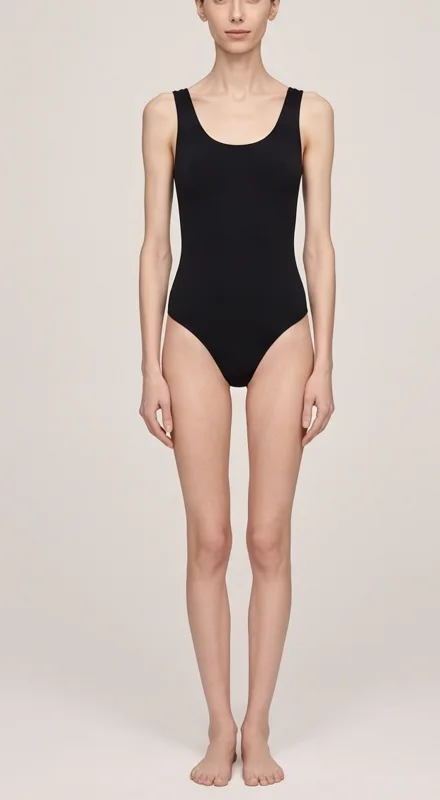
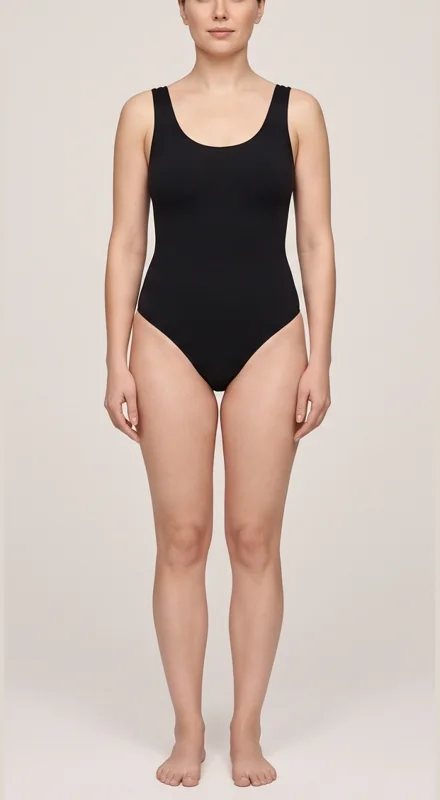
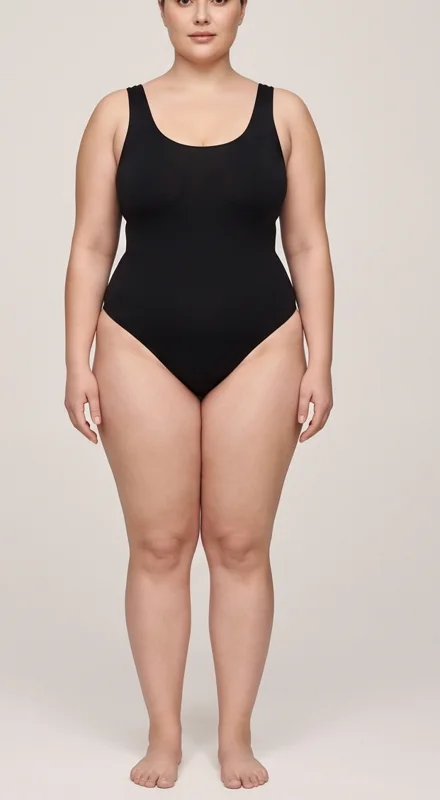
Every question asks about a single physical feature — your height as others perceive it, your shoulder shape, arm and leg length, hand and foot size, torso and waistline, jawline, nose, cheekbones, eyes, lips, hair texture. Each one offers the same five-point answer scale: from a sharp, elongated extreme on one end, through a moderate version of that same sharpness, to a balanced middle, to a moderate softness, to a full, rounded, delicate extreme on the other end. You’re never asked to rate yourself or guess a category — just to pick the description that matches what you actually see.
Why your answers get grouped, not just counted
The engine doesn’t just add up which end of the scale you leaned toward overall. It also tracks where on your body that lean shows up — because three separate zones can each carry a different balance: your bone structure — which includes your facial bones (shoulder shape, limb length, hand and foot size, plus jawline, nose, and cheekbones), your body’s flesh (torso, waist, hipline, the fullness of your arms and thighs), and your facial features (eyes, lips, and the flesh over your cheeks). Two people can land on the same overall lean and still get different results, because one carries that lean mostly in bone structure while the other carries it mostly in flesh or face. Several of the thirteen results exist specifically to capture that split — a body built on bold, sharp bone structure but softened by fuller flesh and features reads differently than a body that’s uniformly bold throughout, even though both would tally similarly if you only looked at the overall total.
When two results are close
Some combinations of answers land close enough to two different results that a simple tally isn’t quite enough to call it. For those cases, the system falls back on direct, paired comparisons — the same eight comparisons covered on this site’s comparison pages — checking specific details like hand and foot size, eye shape, or how angular a jawline reads, to settle which of the two you’re actually closer to.
The Fantasy Quiz is a separate, optional thing
Alongside the physical quiz, there’s an optional second set of questions about taste, indulgence, and daydream scenarios — an inheritance windfall, a dream vacation, a fantasy role in an old film. It’s a lighthearted detour with no scoring stakes, and it measures something different: which of the five root themes your inner style longings lean toward right now, independent of your actual build. That result never changes, overrides, or adjusts your physical result in any way. The two are kept deliberately separate. If they match, your instincts and your body are already speaking the same language. If they don’t, the felt quality you’re drawn to — boldness, romance, order, ease, playfulness — is still worth expressing; it just gets expressed through your own physical type’s vocabulary rather than by dressing like the other type.
Getting an honest answer out of yourself
The physical questions ask about your actual proportions, not a flattering guess, and a few conditions make that easier to see clearly. Answer in fitted clothing rather than anything structured or padded — a boxy jacket or a shoulder pad can hide the very shoulder line a question is asking about. If you can, answer with someone else in the room, ideally someone who’ll tell you the truth rather than the compliment. People consistently misjudge specific things about themselves in predictable directions — petite frames often get read as taller than they are, curvier frames often get undersold, and sharp bone structure sometimes gets softened in the retelling. None of that is a character flaw; it’s just why a second pair of eyes helps.
Same answers, same result
The scoring has no randomness and no hidden weighting that shifts between visits. Answer the same sixteen questions the same way twice, and you’ll get the same result twice — and you’ll see the actual tallies behind it, not just a label. If a result feels off, the fix isn’t to retake the quiz hoping for a different roll; it’s to look again at the specific answers driving it, ideally with that second pair of eyes.
Ready to see your own tallies? Take the quiz — 16 questions, real scoring, no email wall.
Quick answers
Is this Kibbe body type test free?
Yes — all 16 questions, the scoring and your full result are free, with no email wall and no account. The result links straight to your type’s style guides.
Does the quiz use pictures?
Yes. Half the questions pair every answer with a real studio photograph, so you compare your body against five visibly different examples instead of guessing at words.
How long does the quiz take?
Most people finish in five to ten minutes. There are 16 questions, plus a short tie-breaker step that only appears when your scores land close between two types.
How accurate is a Kibbe quiz?
A quiz is a structured starting point, not a verdict. This one follows the original book’s scoring system question-for-question, then asks you to reality-check the result against how clothes actually behave on your body.
What if I seem to be between two types?
Close calls are normal — the scoring detects them and asks one book-faithful tie-breaker question to settle which side you favor. Your runner-up type is shown with your result either way.
Unofficial guide inspired by the Image Identity system in David Kibbe’s Metamorphosis (1987). Body types describe line, not worth — every type is the goal, not a consolation prize.